Amazon 75-Character Product Title Examples by Category
Amazon’s 75-character title update sounds simple until you try rewriting a real catalog.
A title like "Wireless Mouse" fits under 75 characters, but it is too generic.
A title like "Premium Ergonomic Silent Wireless Mouse for Laptop, PC, Office, Home, Gaming, Travel, Long Battery Life, Black" contains useful information, but it is far too long.
The actual work is finding the middle.
You need a title that is short enough, but still specific enough. You need to preserve important supporting details, but not force everything into the title. And you need to know what belongs in Item Highlights instead.
This guide gives practical Amazon 75-character product title examples across common categories.
Use it as a rewrite reference before updating your catalog.
For the broader policy background, read our guide to the Amazon 75-character title limit. For field-by-field allocation, see Amazon title vs Item Highlights. For the workflow behind the examples, start with the Amazon 75-Character Title Compliance workflow.
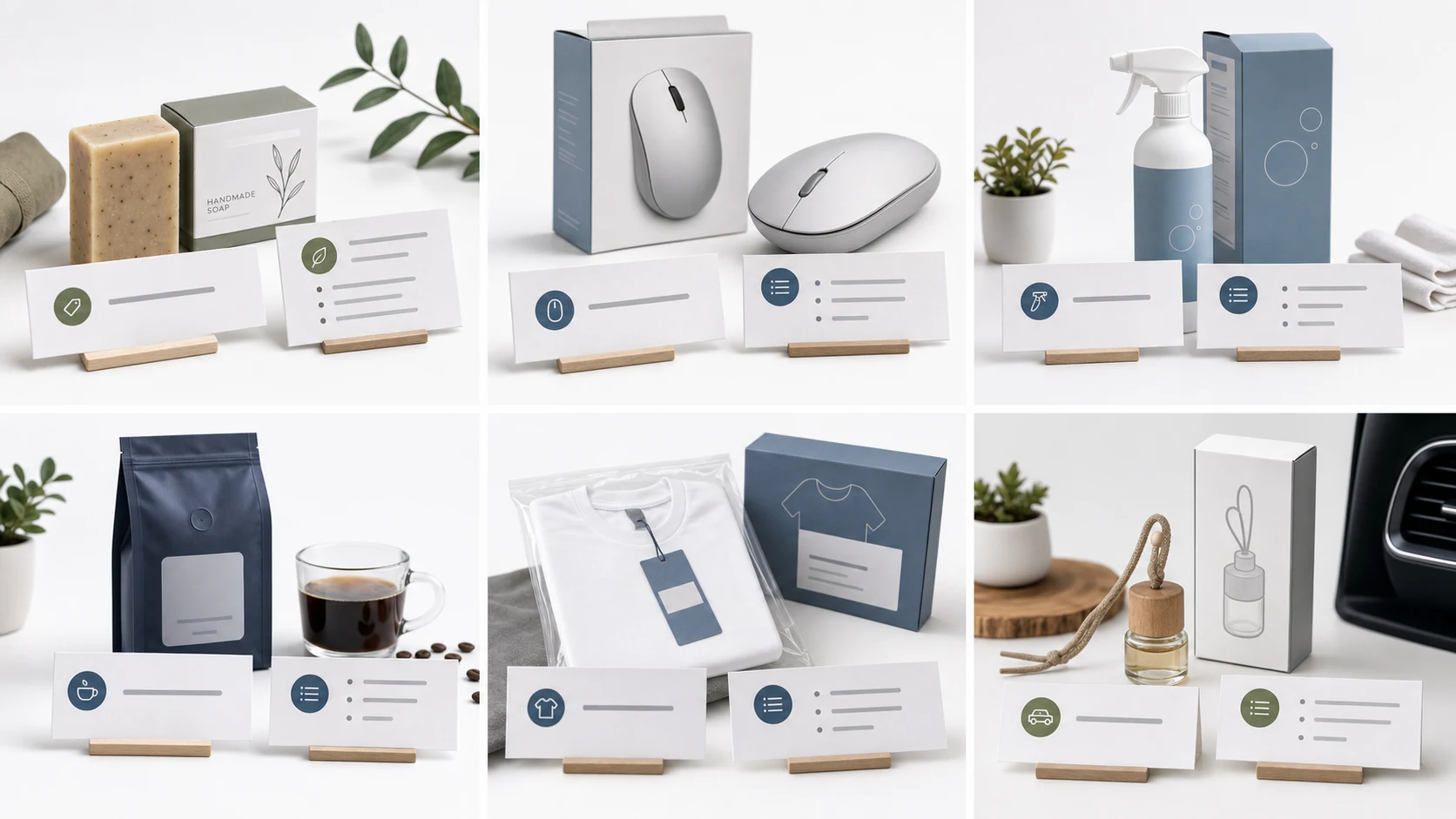
Quick answer: what does a good 75-character Amazon title look like?
A good Amazon title under 75 characters identifies the product clearly using brand, product type, variant or model, and size or quantity when important. It should avoid keyword stuffing, repeated words, unsupported claims, and long benefit stacks. Useful secondary details such as ingredients, materials, benefits, use cases, compatibility, or fragrance should move into Item Highlights instead of being forced into the title.
Amazon’s Seller Central announcement says that starting July 27, 2026, titles in all categories except media need to be 75 characters or fewer including spaces. It also says Item Highlights provide 125 additional searchable characters for materials or recommended use cases. See Amazon’s product title update announcement.
The basic 75-character title formula
A useful starting formula is:
Brand + Product Type + Variant/Model + Size/Quantity
You can adjust this by category.
For example:
| Category | Practical title structure |
|---|---|
| Beauty | Brand + variant + product type + hero ingredient + size |
| Electronics | Brand + product type + feature/model + compatibility/color |
| Home cleaning | Brand + product type + surface/use case + size |
| Food | Brand + product type + flavor/roast/type + quantity |
| Apparel | Brand + product type + style/material/color |
| Car accessories | Brand + fragrance/model + product type + size |
| Pet products | Brand + product type + pet type + size/count |
| Tools | Brand + tool type + size/model + use case |
This formula is not a rigid rule. It is a prioritization system.
The title should answer:
What is this product?
Item Highlights should answer:
What else should the shopper know quickly?
What should not be in the 75-character title?
Before the examples, here is what usually creates trouble:
- repeated keywords
- long benefit chains
- vague promotional words
- unsupported claims
- unnecessary gift phrases
- excessive audience stacking
- noisy separators
- duplicate product descriptors
- every possible use case
- every ingredient or material when only one or two matter
A good 75-character title is not a tiny version of the old keyword-stuffed title.
It is a cleaner title with a clearer job.
Beauty and personal care title examples
Beauty titles often need to balance brand, variant, product type, ingredient, fragrance, benefit, and size.
The mistake is trying to include all of them.
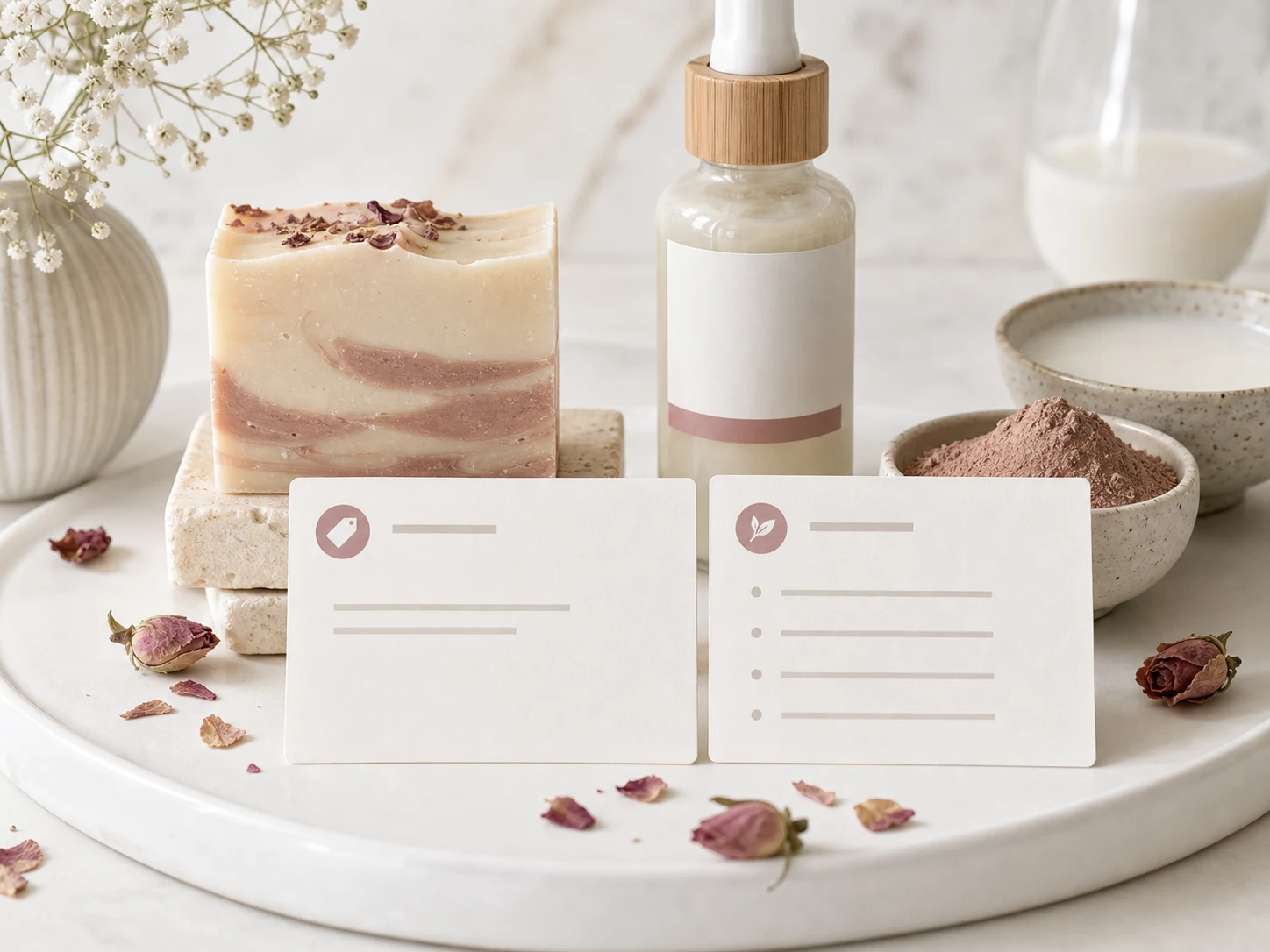
Example 1: Handmade soap
Long title: SOULBAR Mystic Musk Handmade Soap with Moroccan Red Clay & Goat Milk | Detox Bath Bar for Pore Cleansing & Moisturizing | Exotic Musk Fragrance | Organic Paraben Free | Unisex Gift for Diwali & Spa | 100g
75-character title example: SOULBAR Mystic Musk Soap with Red Clay & Goat Milk, 100g
Item Highlights example: Moroccan clay, goat milk, musk fragrance, moisturizing bath bar
What stayed in the title: Brand, variant, product type, hero ingredients, size.
What moved to Item Highlights: Fragrance and benefit context.
What should be reviewed or removed: Gift language, unsupported "organic" wording, and sensitive claims such as anti-aging unless properly supported.
Example 2: Face serum
Long title: Glowvera Vitamin C Face Serum with Hyaluronic Acid for Brightening, Dark Spots, Uneven Skin Tone, Daily Skincare, 30 ml
75-character title example: Glowvera Vitamin C Face Serum with Hyaluronic Acid, 30 ml
Item Highlights example: brightening, dark spots, uneven tone, daily skincare
Why this works: The title keeps product identity and key actives. Item Highlights preserve benefits.
Example 3: Body lotion
Long title: Nouriva Cocoa Butter Body Lotion for Dry Skin with Shea Butter, Vitamin E, Deep Moisturizing Formula, 400 ml
75-character title example: Nouriva Cocoa Butter Body Lotion for Dry Skin, 400 ml
Item Highlights example: shea butter, vitamin E, deep moisturizing formula
Why this works: The title stays readable. The highlights carry ingredient and benefit detail.
Electronics accessory title examples
Electronics titles often include compatibility, model, feature, color, size, cable length, and performance claims.
The key is to preserve product identity and compatibility without creating a word salad.
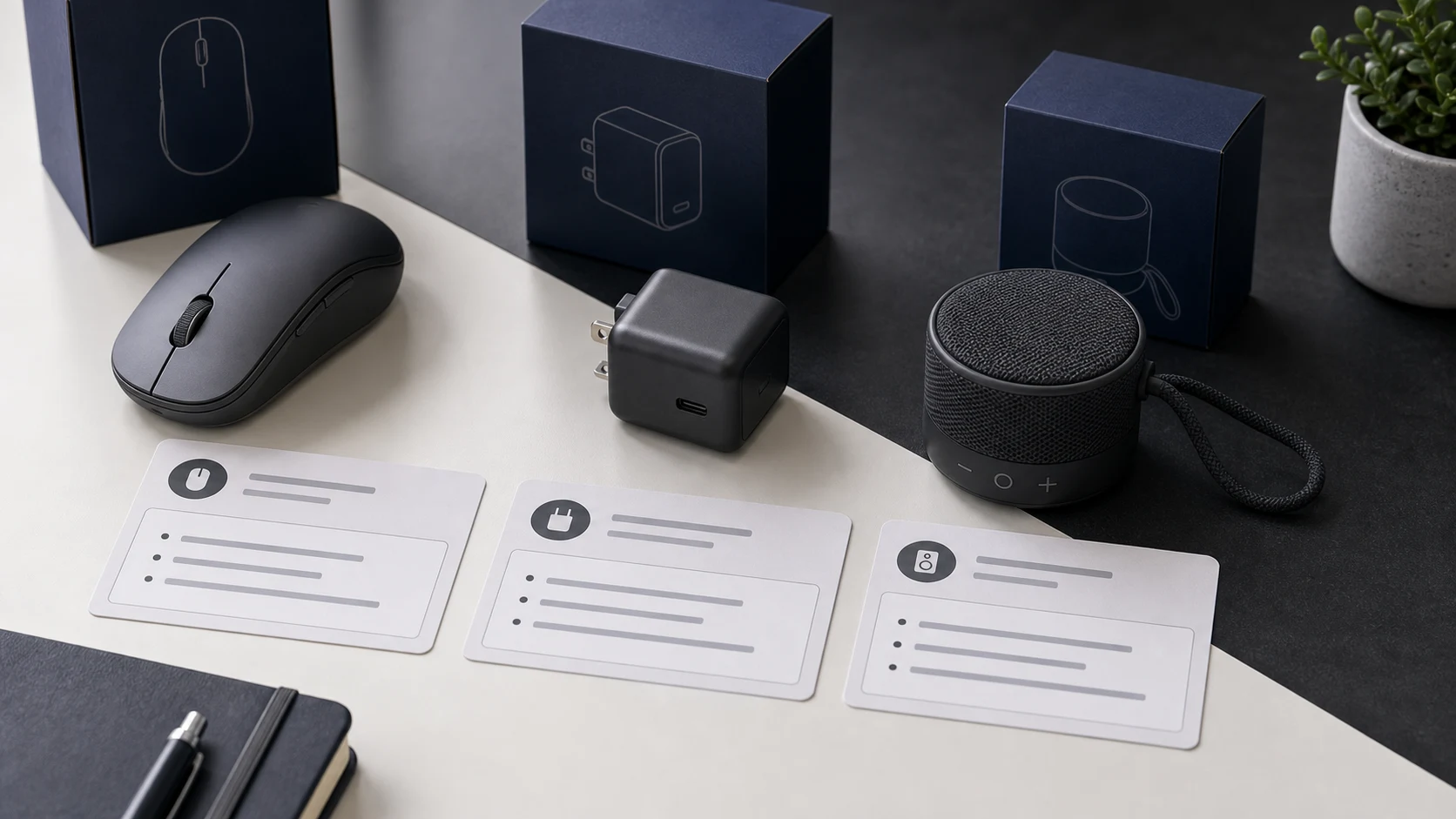
Example 4: Wireless mouse
Long title: ArcLite Wireless Mouse for Laptop with Silent Click, USB Receiver, Ergonomic Design, Long Battery Life, Black
75-character title example: ArcLite Wireless Mouse with Silent Click, Black
Item Highlights example: USB receiver, ergonomic design, long battery life, laptop use
What stayed in the title: Brand, product type, core feature, color.
What moved to Item Highlights: Receiver, ergonomic benefit, battery life, compatibility.
Example 5: USB-C charger
Long title: VoltEdge 20W USB-C Fast Charger for iPhone, Android, Samsung, iPad, Travel Wall Adapter, White
75-character title example: VoltEdge 20W USB-C Fast Charger, White
Item Highlights example: iPhone, Android, Samsung, iPad, travel wall adapter
Why this works: The title keeps wattage, connector, product type, and color. Compatibility moves to highlights.
Example 6: Bluetooth speaker
Long title: SoundPebble Portable Bluetooth Speaker with Deep Bass, Waterproof Design, 12-Hour Battery, Outdoor Travel Speaker, Black
75-character title example: SoundPebble Portable Bluetooth Speaker, Black
Item Highlights example: deep bass, waterproof design, 12-hour battery, outdoor use
Why this works: The title identifies the speaker. Highlights preserve features.
Home cleaning title examples
Cleaning titles often include surface types, stain types, safety claims, and benefit wording.
Be careful with claims such as non-toxic, child-safe, or disinfecting unless they are accurate and supported.
Example 7: Stain remover
Long title: BrightWash Fabric Stain Remover Spray for Clothes, Sofa, Carpet & Upholstery | Color Safe Formula | Removes Food, Oil and Dirt Stains | 500 ml
75-character title example: BrightWash Fabric Stain Remover Spray, 500 ml
Item Highlights example: clothes, sofa, carpet use, color-safe formula, food and oil stains
What stayed in the title: Brand, product type, size.
What moved to Item Highlights: Surfaces, formula detail, stain types.
Example 8: Dishwashing liquid
Long title: CleanDrop Lemon Dishwashing Liquid for Grease Removal, Fresh Fragrance, Gentle on Hands, 750 ml
75-character title example: CleanDrop Lemon Dishwashing Liquid, 750 ml
Item Highlights example: grease removal, fresh fragrance, gentle on hands
Why this works: The title keeps product identity. Benefits move to highlights.
Example 9: Floor cleaner
Long title: ShineHome Lavender Floor Cleaner for Tiles, Marble & Kitchen Floors with Long Lasting Fragrance, 1 L
75-character title example: ShineHome Lavender Floor Cleaner, 1 L
Item Highlights example: tiles, marble, kitchen floors, long-lasting fragrance
Why this works: The title is clean. Surface types and fragrance context move to highlights.
Food and beverage title examples
Food titles often need flavor, roast, format, pack size, dietary attributes, and usage context.
Do not add dietary or health claims unless they are supported.
Example 10: Ground coffee
Long title: BeanCo Arabica Ground Coffee Medium Roast with Smooth Aroma for Moka Pot, French Press and Filter Brew, 250g
75-character title example: BeanCo Arabica Ground Coffee, Medium Roast, 250g
Item Highlights example: smooth aroma, moka pot, French press and filter brew
What stayed in the title: Brand, product type, roast, quantity.
What moved to Item Highlights: Aroma and brewing methods.
Example 11: Granola
Long title: CrunchNest Almond Honey Granola with Rolled Oats, Nuts and Seeds, Breakfast Cereal, 500g
75-character title example: CrunchNest Almond Honey Granola, 500g
Item Highlights example: rolled oats, nuts and seeds, breakfast cereal
Why this works: The title keeps flavor and quantity. Highlights preserve ingredient and usage context.
Example 12: Tea
Long title: LeafAura Green Tea Bags with Jasmine Flavor, Antioxidant Rich Herbal Wellness Tea, Pack of 50
75-character title example: LeafAura Jasmine Green Tea Bags, Pack of 50
Item Highlights example: jasmine flavor, herbal wellness tea, antioxidant rich
Review note: Health or wellness-related wording should be reviewed for accuracy and category fit.
Apparel title examples
Apparel titles often include brand, product type, fit, material, color, size, occasion, and audience.
Avoid stuffing every audience and occasion into the title.
Example 13: T-shirt
Long title: UrbanNest Men's Cotton Crew Neck T-Shirt Regular Fit Casual Wear Half Sleeve Black, Size L
75-character title example: UrbanNest Men's Cotton Crew Neck T-Shirt, Black, L
Item Highlights example: regular fit, half sleeve, casual wear
What stayed in the title: Brand, audience, material, product type, color, size.
What moved to Item Highlights: Fit, sleeve, use case.
Example 14: Yoga leggings
Long title: Flexora Women's High Waist Yoga Leggings with Stretch Fabric, Gym, Running and Workout Pants, Navy, M
75-character title example: Flexora Women's High Waist Yoga Leggings, Navy, M
Item Highlights example: stretch fabric, gym, running and workout use
Why this works: The title stays specific. Use cases move to highlights.
Example 15: Hoodie
Long title: NorthWay Unisex Fleece Hoodie with Kangaroo Pocket, Winter Casual Sweatshirt, Grey, Size XL
75-character title example: NorthWay Unisex Fleece Hoodie, Grey, XL
Item Highlights example: kangaroo pocket, winter casual sweatshirt
Why this works: The title keeps the item identity. Details move to highlights.
Car accessory title examples
Car accessory titles often include fragrance, format, quantity, fit, and use case.
Example 16: Car perfume spray
Long title: Soulbar | Royal Musk | Car Perfume Spray with Hanging Card, 700+ Sprays Long Lasting Car Freshener (80 ml)
75-character title example: Soulbar Royal Musk Car Perfume Spray, 80 ml
Item Highlights example: hanging card, long-lasting car freshener, 700+ sprays
What stayed in the title: Brand, fragrance, product type, size.
What moved to Item Highlights: Hanging card format and spray count.
Example 17: Car microfiber cloth
Long title: AutoGleam Microfiber Cleaning Cloth for Car Interior, Dashboard, Glass and Body, Pack of 5
75-character title example: AutoGleam Microfiber Car Cleaning Cloth, Pack of 5
Item Highlights example: interior, dashboard, glass and body use
Why this works: The title keeps product identity and pack count. Use cases move to highlights.
Example 18: Phone mount
Long title: DriveMate Magnetic Car Phone Mount for Dashboard with Strong Hold, 360 Rotation, Universal Fit, Black
75-character title example: DriveMate Magnetic Car Phone Mount, Black
Item Highlights example: dashboard use, strong hold, 360 rotation, universal fit
Why this works: The title keeps the product and core type. Features move to highlights.
Pet product title examples
Pet titles often need pet type, life stage, size, flavor, count, and use case.
Example 19: Dog shampoo
Long title: PawPure Dog Shampoo with Oatmeal and Aloe Vera for Itchy Skin, Gentle Coat Care, 500 ml
75-character title example: PawPure Dog Shampoo with Oatmeal & Aloe Vera, 500 ml
Item Highlights example: gentle coat care, itchy skin support
Review note: Skin-related claims should be reviewed for accuracy and category fit.
Example 20: Cat litter
Long title: KittyNest Clumping Cat Litter with Odor Control, Low Dust Formula, Lavender Scent, 5 kg
75-character title example: KittyNest Clumping Cat Litter, Lavender Scent, 5 kg
Item Highlights example: odor control, low dust formula
Why this works: The title keeps product type, scent, and size. Benefits move to highlights.
Tool and hardware title examples
Tools often need size, material, compatibility, and use case.
Example 21: Drill bit set
Long title: BuildPro Titanium Coated Drill Bit Set for Metal, Wood and Plastic, 13 Pieces with Storage Case
75-character title example: BuildPro Titanium Drill Bit Set, 13 Pieces
Item Highlights example: metal, wood and plastic use, storage case
Why this works: The title keeps product identity and count. Use cases move to highlights.
Example 22: Measuring tape
Long title: MeasureMate Steel Measuring Tape with Lock Button, Metric and Inch Scale, Heavy Duty, 5 m
75-character title example: MeasureMate Steel Measuring Tape, 5 m
Item Highlights example: lock button, metric and inch scale, heavy-duty build
Why this works: The title stays clear. Feature details move to highlights.
The pattern across all examples
Across categories, the best rewrites follow the same logic:
| Keep in title | Move to Item Highlights | Remove or review |
|---|---|---|
| Brand | Ingredients | Repeated keywords |
| Product type | Materials | Unsupported claims |
| Variant/model | Benefits | Promotional filler |
| Size/quantity | Use cases | Noisy separators |
| One core differentiator | Compatibility | Excessive audience stacking |
The title should carry the strongest identity signal.
Item Highlights should carry useful supporting detail.
Everything else should be removed or reviewed.
Product title summarization research also reflects the broader ecommerce problem: sellers often pack long titles with attributes to support retrieval and describe aspects, which can make titles awkward and overlong. See InstructPTS: Instruction-Tuning LLMs for Product Title Summarization.
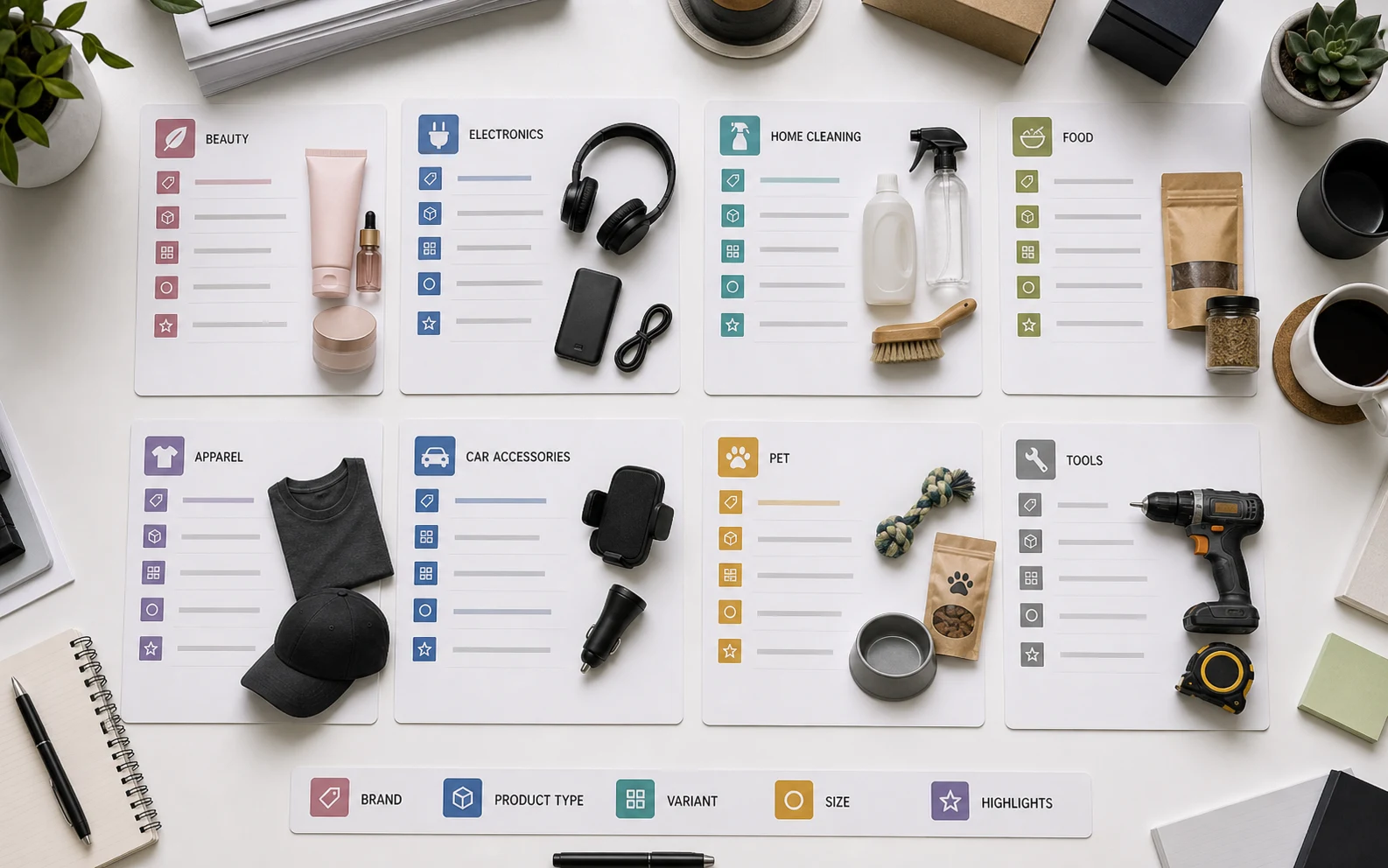
How to create examples from your own Amazon TXT export
If you want category-specific examples from your own catalog, start with your Amazon Seller Central TXT export.
Basic path:
- Log in to Amazon Seller Central.
- Go to Reports.
- Open Inventory Reports.
- Choose Active Listings, All Listings, Open Listings, or Category Listings Report.
- Click Request Report.
- Wait until the status becomes Ready.
- Click Download.
- Use the downloaded
.txtfile for your title and Item Highlights workflow.
The file helps preserve item-name, item-description, SKU, ASIN, listing ID, product ID, price, quantity, and other catalog columns while you review examples.
Amazon’s Inventory Reports documentation covers the report request and download workflow. See Amazon’s download an inventory report guide.
How AgenixSocial helps generate 75-character title examples
AgenixSocial’s Amazon 75-Character Title Compliance workflow helps sellers generate review-ready title and Item Highlights examples from their actual catalog data.
Sellers upload the original Amazon Seller Central TXT export. AgenixSocial primarily uses the item name, item description, and eligible product attributes from each row to create shorter titles and one comma-separated Item Highlights value.
The workflow supports:
- all-valid-row generation
- selected-row generation
- editable titles
- editable Item Highlights
- regeneration
- confidence signals
- validation notes
- live length counters
- review-ready XLSX export
- original Amazon column preservation
This is useful because examples are more valuable when they come from your own catalog, not generic templates.
AgenixSocial does not directly upload changes to Amazon. It does not guarantee Amazon approval. Sellers should review product accuracy, claims, category fit, and marketplace requirements before applying updates.
The first 100 products are free. After that, it is 1 credit per additional 100 products. See pay-as-you-go credits for pricing context.
If you also need supporting creative, see marketplace listing image sets, Amazon A+ content generation, and Amazon seller content workflows.
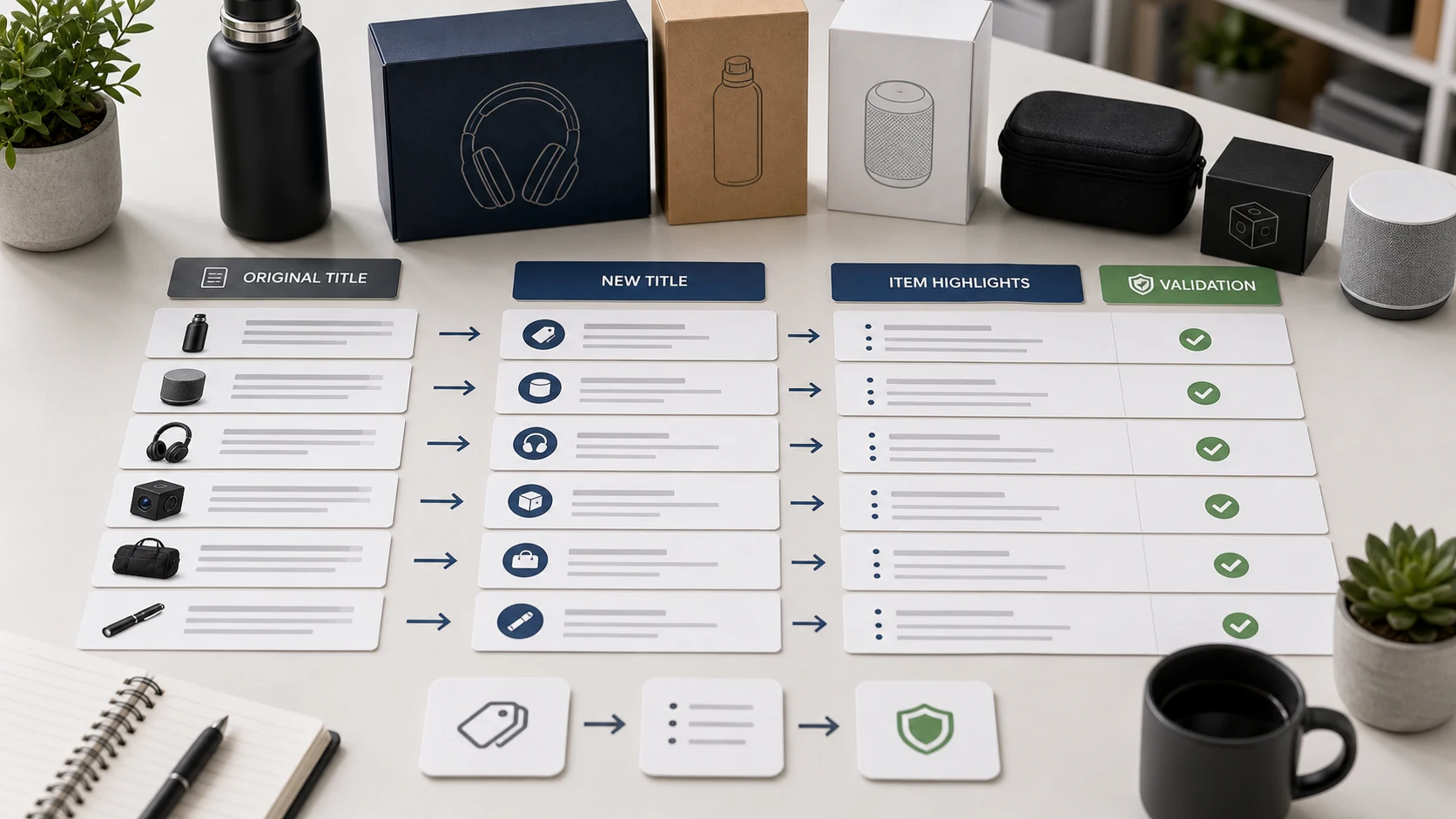
Example review checklist
Before applying any rewritten title, check:
Title
- Is the title 75 characters or fewer?
- Does it preserve brand where useful?
- Is the product type clear?
- Does it include variant or model when needed?
- Does it include size or quantity when important?
- Does it avoid repeated keywords?
- Does it avoid noisy separators?
- Does it avoid unsupported claims?
Item Highlights
- Is the Item Highlights value 125 characters or fewer?
- Does it preserve useful secondary detail?
- Is it readable?
- Does it avoid repeating the title?
- Does it avoid paragraph-style copy?
- Does it avoid keyword stuffing?
Product accuracy
- Are ingredients correct?
- Are compatibility terms accurate?
- Are fragrance, size, quantity, and material correct?
- Are benefit claims supported?
- Are sensitive claims reviewed?
Workflow
- Is SKU or ASIN preserved?
- Is the original title visible?
- Is the original description visible?
- Is the row approved for update?
- Are changes tracked?
Common mistakes in 75-character title examples
Mistake 1: Making the title too generic
Short titles can lose product identity. Do not remove variant, size, or product type if those details matter.
Mistake 2: Keeping promotional language over product information
Use the limited space for concrete product details before vague adjectives.
Mistake 3: Repeating the same information in Item Highlights
The highlights should add context, not duplicate the title.
Mistake 4: Moving risky claims without review
Claims such as anti-aging, organic, non-toxic, clinically proven, and guaranteed should be reviewed before reuse.
Amazon’s 2025 title policy updates also show the broader direction around repeated words, special characters, and title cleanup. See Amazon’s new title policy changes.
Mistake 5: Using the same formula for every category
Different categories need different title structures.
Related Amazon title guides
Use these companion guides if you are working through the full cleanup process:
- Amazon 75-character title limit
- Amazon Item Highlights
- Amazon title vs Item Highlights
- rewrite Amazon product titles under 75 characters
- Amazon Seller Central TXT file
FAQ
What is an example of a good Amazon title under 75 characters?
A good example is "SOULBAR Mystic Musk Soap with Red Clay & Goat Milk, 100g." It keeps brand, variant, product type, key ingredients, and size within a readable title.
What should an Amazon product title include?
An Amazon product title should usually include brand, product type, variant or model, and size or quantity when important.
What should move into Item Highlights?
Move source-supported secondary details such as ingredients, materials, benefits, use cases, compatibility, fragrance, and audience details.
Should benefits stay in the title?
Usually, benefits are better suited for Item Highlights unless the benefit is central to product identity.
Should size stay in the Amazon title?
Often yes. Size or quantity should stay in the title when it affects product comparison.
Should keywords be removed from Amazon titles?
No. Product-defining keywords should stay. Repeated, unsupported, or low-value keyword stuffing should be removed or moved where appropriate.
Can Item Highlights repeat the title?
Usually no. Item Highlights should support the title, not duplicate it.
How do I generate 75-character title examples for my own catalog?
Download your Amazon Seller Central TXT export, use the item-name and item-description fields as source context, generate shorter titles and Item Highlights, then review the output before applying updates.
Does AgenixSocial directly upload title changes to Amazon?
No. AgenixSocial creates a review-ready XLSX. Sellers should apply approved values through the correct Amazon update workflow.
Does AgenixSocial guarantee Amazon approval?
No. AgenixSocial helps with compliance preparation and review. Sellers should still check product accuracy, claims, category fit, and marketplace requirements before applying changes.
Conclusion
A good Amazon title under 75 characters is not the shortest possible version of your old title.
It is the clearest version of your product identity.
The title should keep the details that help shoppers understand what the product is. Item Highlights should preserve useful supporting details. Repetition, vague promotion, unsupported claims, and clutter should be removed or reviewed.
The examples in this guide give you patterns. Your own catalog will still need review.
AgenixSocial helps sellers create those examples from real Amazon listing data. Upload your Amazon TXT export, generate 75-character titles and 125-character Item Highlights, review confidence and validation notes, edit or regenerate where needed, and export a review-ready XLSX your team can use.
First 100 products are free. After that, it is 1 credit per additional 100 products.
Generate 75-character Amazon title examples from your own catalog with AgenixSocial’s Amazon 75-Character Title Compliance workflow.