Amazon 75-Character Title Update for D2C Brands Selling on Amazon
Amazon’s 75-character title update is not just an Amazon seller problem.
It is also a D2C brand problem.
Many D2C brands now sell across multiple channels: Shopify, Amazon, social commerce, marketplaces, retail, and sometimes wholesale. The same product may have a polished brand name on the D2C site, a longer keyword-heavy title on Amazon, a shorter title in ads, and a different naming pattern inside the internal product catalog.
Amazon’s new title structure puts pressure on that inconsistency.
Starting July 27, 2026, Amazon is moving most non-media product titles toward 75 characters or fewer, including spaces. Item Highlights give sellers another 125 characters for compact supporting details such as materials, ingredients, or recommended use cases.
For a D2C brand, the task is not only to shorten Amazon titles.
The real task is to make Amazon titles compliant without breaking product identity, brand consistency, and customer understanding.
Quick answer: how should D2C brands handle Amazon’s 75-character title update?
D2C brands should treat Amazon’s 75-character title update as a brand and catalog alignment project. The title should preserve core product identity: brand, product type, variant, size, and one essential differentiator when needed. Useful secondary details should move into Item Highlights. Teams should start from the original Amazon TXT export, preserve SKU and ASIN context, review claims, and make sure Amazon titles stay aligned with the brand’s product catalog and customer-facing naming.

Why this update affects D2C brands differently
Amazon-native sellers often think first in terms of marketplace search and category competition.
D2C brands have another layer to manage: brand consistency.
A D2C brand may already have:
- product names on Shopify
- product pages on the brand website
- social media naming
- ad creative naming
- packaging names
- influencer/creator briefs
- Amazon listing titles
- marketplace image copy
- Amazon A+ content
- internal catalog fields
If Amazon titles are rewritten in isolation, they can drift away from the rest of the brand.
That creates confusion.
A customer may discover the product on Amazon, see a different name on the website, and see another variation in social ads. That may not destroy conversion, but it weakens consistency.
D2C brands should use the title update as a chance to clean up product naming across channels.
The D2C title challenge: brand language vs marketplace structure
D2C brands often name products with emotion.
Examples:
- Mystic Musk
- Sakura Blush
- Morning Bloom
- Ocean Breeze
- Black Crystal
- Royal Musk
Those names matter. They carry brand feel.
Amazon titles also need practical product information:
- soap
- car perfume spray
- face serum
- coffee
- t-shirt
- stain remover
- 100g
- 80 ml
- pack of 3
- USB-C
- wireless
The title has to balance both.
A pure brand title may be too vague.
A pure marketplace title may feel generic.
The better structure is:
Brand + Product/Variant Name + Product Type + Key Attribute + Size
Example:
SOULBAR Mystic Musk Soap with Red Clay & Goat Milk, 100g
This keeps the brand feel and the product clarity.
What should stay in the Amazon title for D2C brands?
For D2C brands, the Amazon title should usually preserve:
- Brand name
- Product or variant name
- Product type
- Size, quantity, or pack count when important
- One identity-defining ingredient, material, or feature if space allows
A practical formula:
Brand + Variant + Product Type + Hero Attribute + Size
| D2C product | Better Amazon title direction |
|---|---|
| Mystic Musk soap | SOULBAR Mystic Musk Soap with Red Clay & Goat Milk, 100g |
| Royal Musk car perfume | Soulbar Royal Musk Car Perfume Spray, 80 ml |
| Vitamin C serum | Glowvera Vitamin C Face Serum with Hyaluronic Acid, 30 ml |
| Medium roast coffee | BeanCo Arabica Ground Coffee, Medium Roast, 250g |
| Cotton t-shirt | UrbanNest Cotton Crew Neck T-Shirt, Black, L |
The title should be short, but not stripped of brand meaning.
What should move into Item Highlights?
Item Highlights should carry compact supporting details that do not fit in the shorter title.
For D2C brands, Item Highlights are useful for:
- ingredients
- materials
- benefits
- use cases
- fragrance
- compatibility
- audience
- texture
- surface type
- brewing method
- fit
- secondary differentiators
Example:
- Title:
SOULBAR Mystic Musk Soap with Red Clay & Goat Milk, 100g - Item Highlights:
Moroccan clay, goat milk, musk fragrance, moisturizing bath bar
This keeps the Amazon title clean while preserving useful product context.
What D2C brands should avoid
The shorter title structure makes bad habits more obvious.
Avoid:
- stuffing every brand phrase into the title
- removing the brand name unnecessarily
- deleting useful variant names
- moving unsupported claims into Item Highlights
- treating Item Highlights like bullet points
- treating Item Highlights like backend keywords
- using generic titles that erase product differentiation
- accepting automated rewrites without review
- rewriting Amazon titles separately from Shopify/catalog naming
The goal is not to make Amazon titles plain.
The goal is to make them clear.
D2C example: product naming across channels
Consider a D2C soap brand.
- Shopify product name:
Mystic Musk Handmade Luxury Soap - Old Amazon title:
SOULBAR Mystic Musk Handmade Soap with Moroccan Red Clay & Goat Milk | Detox Bath Bar for Pore Cleansing & Moisturizing | Exotic Musk Fragrance | Organic Paraben Free | Unisex Gift for Diwali & Spa | 100g - Better Amazon title:
SOULBAR Mystic Musk Soap with Red Clay & Goat Milk, 100g - Item Highlights:
Moroccan clay, goat milk, musk fragrance, moisturizing bath bar
Why this works
The Amazon title preserves the brand and product identity. Item Highlights preserve supporting detail. The title is not a generic marketplace title, and it is not the old overloaded version either.
Why D2C brands should not rely passively on Amazon AI recommendations
Amazon has said titles still over the limit after the deadline may be updated gradually to AI recommendations.
That may help clean up some listings.
But D2C brands should not rely passively on marketplace-side rewriting.
Why?
Because brand teams usually care about product names and brand tone in ways automated recommendations may not fully capture.
An automated rewrite may shorten the title, but it may also:
- remove the variant name
- remove a hero ingredient
- make the title too generic
- change naming consistency across variants
- prioritize different details than the brand would choose
- create mismatch with Shopify or packaging names
For D2C brands, the safer move is to prepare seller-controlled title and Item Highlights updates before the deadline.
How to get the Amazon TXT export
To prepare the catalog, start with the original Amazon Seller Central TXT export.
Basic path:
- Log in to Amazon Seller Central.
- Go to Reports.
- Open Inventory Reports.
- Choose Active Listings, All Listings, Open Listings, or Category Listings Report, depending on the catalog view you need.
- Click Request Report.
- Wait until the report status becomes Ready.
- Click Download.
Use the downloaded .txt file for your title and Item Highlights workflow.
If your workflow expects the original TXT export, do not convert it to CSV or XLSX before processing.
The source file helps preserve the relationship between product title, description, SKU, ASIN, product ID, listing ID, price, quantity, and other catalog fields.
D2C title cleanup workflow
Use this workflow before July 27, 2026.
Step 1: Export the Amazon listing data
Start from the original Seller Central TXT export. Keep a backup.
Step 2: Compare Amazon titles with your D2C product catalog
Look for naming mismatches.
Ask:
- Does Amazon use the same variant name as Shopify?
- Does the title include the brand name?
- Does the title clearly state product type?
- Does the size match the product catalog?
- Are ingredients or materials accurate?
- Are old claims still valid?
Step 3: Segment titles by length
Use these buckets:
| Title length | Action |
|---|---|
| 150+ characters | Major rewrite |
| 101–150 characters | Rewrite and move details to Item Highlights |
| 76–100 characters | Compress and review |
| 75 or fewer characters | Review for consistency and Item Highlights |
Step 4: Define brand-safe title rules
For each product family, define how names should appear.
Example:
- Soap:
Brand → variant → product type → hero ingredient → size - Car perfume:
Brand → fragrance → product type → size - Skincare:
Brand → active ingredient → product type → size - Coffee:
Brand → bean/type → roast/flavor → quantity
Step 5: Create Item Highlights from real product context
Use source-supported details from the original title, description, and product catalog.
Do not invent new attributes.
Step 6: Review claims
D2C brands often use strong claims in marketing.
Review:
- anti-aging
- organic
- clean
- non-toxic
- dermatologist-approved
- clinically proven
- safe for kids or pets
- long-lasting
- chemical-free
- compatibility claims
Claims may be valid, but they need review before reuse.
Step 7: Export a review-ready file
The review file should include:
- original Amazon title
- new title
- Item Highlights
- title length
- highlights length
- SKU
- ASIN
- product ID
- validation notes
- review status
- original Amazon columns
This helps ecommerce, brand, and catalog teams review together.
How this connects to Amazon images and A+ content
Titles are only one part of Amazon content.
For D2C brands, marketplace consistency also depends on:
- listing images
- infographics
- product shots
- comparison graphics
- Amazon A+ content
- Brand Story
- campaign assets
- founder/brand storytelling
- product education
A shorter title may make your listing cleaner, but your product still needs enough context elsewhere.
That means the title update is a good time to review the broader Amazon content system:
| Asset | Role |
|---|---|
| Title | Identify the product |
| Item Highlights | Preserve compact supporting detail |
| Listing images | Show features, benefits, and use cases visually |
| A+ content | Tell the deeper product and brand story |
| Brand Story | Build trust and differentiation |
| Product catalog | Keep source truth consistent across channels |
This is where D2C brands should think beyond one field.
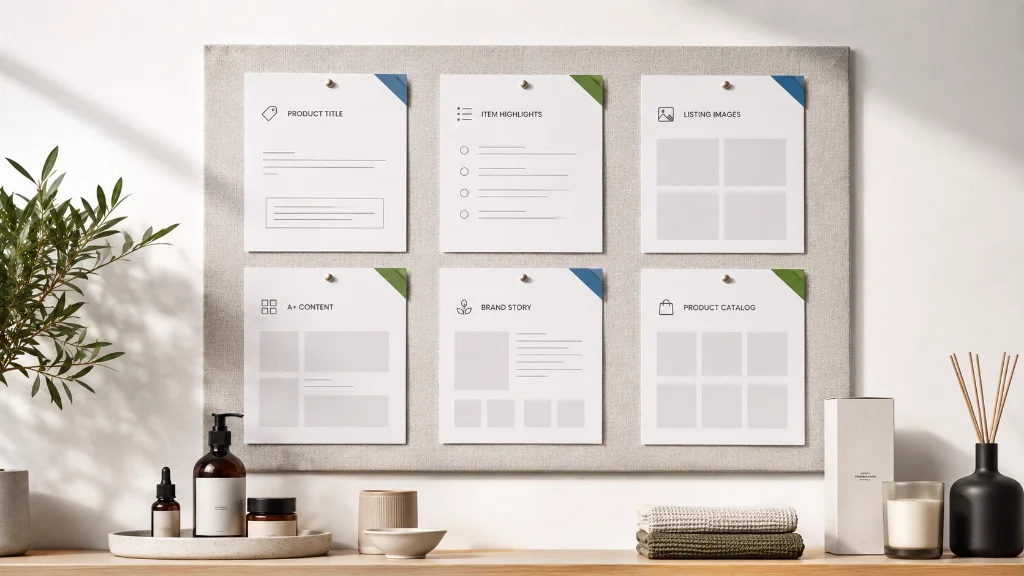
How AgenixSocial helps D2C brands
AgenixSocial is built as a brand-aware, product-aware commerce content workspace for D2C and marketplace brands.
For Amazon title compliance, D2C teams can use the Amazon 75-Character Title Compliance workflow to upload an original Amazon Seller Central TXT export, generate shorter titles and one comma-separated Item Highlights value, review confidence and validation notes, edit or regenerate rows, and export a review-ready XLSX while preserving original Amazon columns.
That helps with the immediate title compliance workflow.
But the broader advantage for D2C teams is that AgenixSocial also connects Amazon content work to other commerce-content workflows:
- Brand DNA for reusable brand context
- Products as the catalog source of truth
- Marketplace Listing Studio for generating marketplace listing image sets
- Amazon A+ Studio for Amazon A+ content generation and brand story modules
- Media Library for asset organization
- Campaigns and scheduling for broader content planning
The title update is one urgent task. D2C brands should use it as a starting point to clean up the broader marketplace content system.
Note: AgenixSocial does not publish title changes to Amazon. It does not promise Amazon will approve every change. Teams should still review product accuracy, claims, category fit, brand tone, and marketplace requirements before applying updates.
The first 100 products are free. After that, it is 1 credit per additional 100 products. Review options on Pricing.
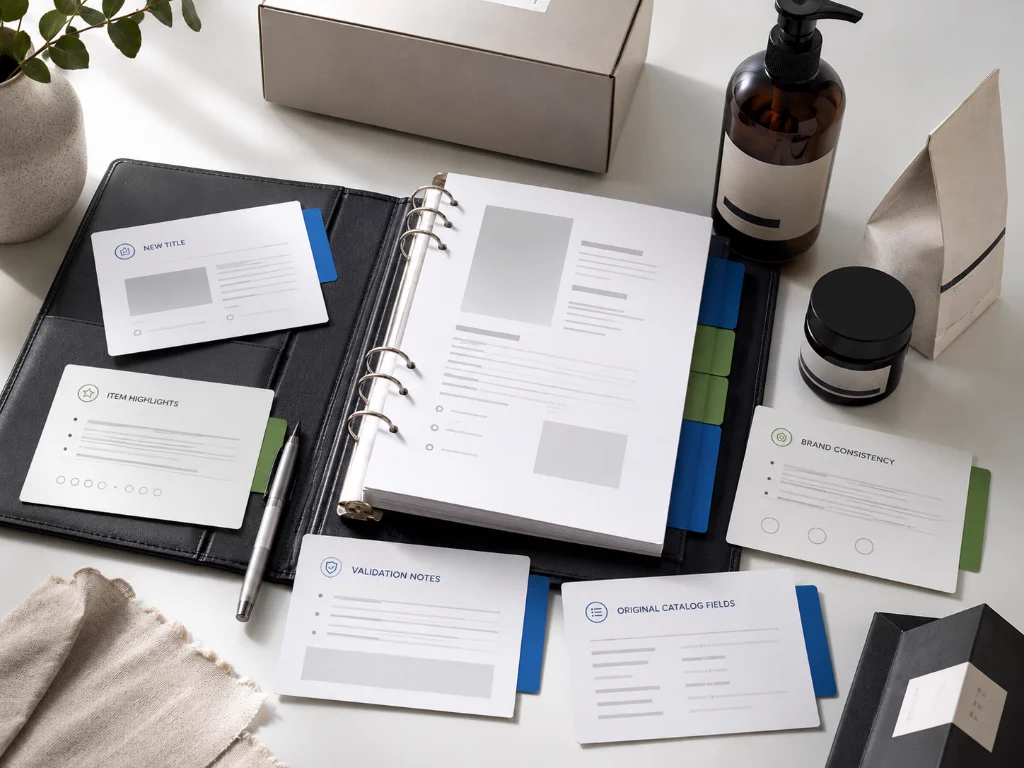
D2C brand checklist
Use this checklist before updating Amazon titles.
Brand alignment
- Brand name preserved where useful.
- Variant names match D2C catalog naming.
- Product type is clear.
- Size and quantity match product data.
- Amazon title does not feel generic.
- Title does not conflict with packaging or Shopify naming.
Item Highlights
- Useful ingredients, materials, or benefits preserved.
- Fragrance, use case, or compatibility added where useful.
- Highlights are 125 characters or fewer.
- Highlights do not repeat the title.
- Highlights are not written like full bullet points.
- Highlights are source-supported.
Catalog operations
- Original Amazon TXT export downloaded.
- SKU, ASIN, listing ID, and product ID preserved.
- Titles grouped by product family.
- Review status assigned.
- Approved file prepared.
Claims and review
- Marketing claims reviewed.
- Sensitive claims checked.
- Compatibility claims verified.
- Brand tone reviewed.
- Category fit checked.
- Final updates applied through the correct Amazon workflow.
Common mistakes D2C brands should avoid
Mistake 1: Making titles too marketplace-generic
Do not erase your product names and variants just to shorten the title.
Mistake 2: Keeping the old keyword-stuffed Amazon title
The old title may no longer fit the new structure.
Mistake 3: Ignoring Shopify/catalog naming
Amazon titles should not drift too far from the product’s core catalog identity.
Mistake 4: Treating Item Highlights like ads
Item Highlights should be compact product detail, not promotional copy.
Mistake 5: Moving strong marketing claims without review
Claims still need accuracy and category review.
Mistake 6: Fixing titles but ignoring listing images and A+ content
A shorter title may require stronger supporting visuals and product education elsewhere.
FAQ
How does Amazon’s 75-character title update affect D2C brands?
It forces D2C brands to shorten Amazon titles while preserving product identity, variant naming, brand consistency, and useful product context through Item Highlights.
Should D2C brands keep the brand name in Amazon titles?
Usually yes, especially when the brand name helps identify the product and connect Amazon listings to the broader D2C brand experience.
Should variant names stay in the title?
Often yes. Variant names help shoppers distinguish products and keep Amazon naming aligned with Shopify, packaging, and social content.
What should move into Item Highlights?
Move source-supported details such as ingredients, materials, benefits, use cases, fragrance, compatibility, or audience details.
Should D2C brands rely on Amazon AI title recommendations?
They should review Amazon recommendations where available, but D2C brands should prepare their own title and Item Highlights updates first to protect product naming and brand consistency.
Where do D2C brands get the Amazon TXT export?
Go to Amazon Seller Central → Reports → Inventory Reports, choose Active Listings, All Listings, Open Listings, or Category Listings Report, request the report, wait until it is ready, then download the original .txt file.
Does AgenixSocial publish changes to Amazon?
No. AgenixSocial creates a review-ready XLSX. Sellers should apply approved values through the correct Amazon update workflow.
Does AgenixSocial promise Amazon approval?
No. AgenixSocial helps with title compliance preparation and review. Teams should still check product accuracy, claims, category fit, brand tone, and marketplace requirements before applying updates.
Conclusion
Amazon’s 75-character title update is a practical compliance task, but D2C brands should treat it as something bigger.
It is a chance to clean up product naming across channels.
Your Amazon title should be short enough for the new structure, but still strong enough to preserve product identity. Item Highlights should carry useful supporting detail. Claims should be reviewed. Catalog data should stay connected to SKU and ASIN context. Amazon naming should not drift away from your D2C product catalog.
AgenixSocial helps D2C teams handle this workflow. Upload your Amazon TXT export, generate shorter titles and 125-character Item Highlights, review confidence and validation notes, edit or regenerate where needed, and export a review-ready XLSX your team can use.
First 100 products are free. After that, it is 1 credit per additional 100 products.
CTA: Prepare your D2C brand’s Amazon catalog with AgenixSocial’s Amazon 75-Character Title Compliance workflow.