Why Founder-led Content Works for D2C Brands
Quick answer
Founder-led content works for D2C brands because it connects the product to a real human point of view. The founder can explain why the product exists, what customer problem it solves, how it was developed, and what the brand believes. This helps build trust, answer objections, support launches, and make product education feel more personal.
If you want the product workflow behind this idea, start with Founder Studio. If you want the reusable brand and product context that keeps founder content grounded, see Brand DNA, Campaigns, and AI Creator Videos.
What is founder-led content?
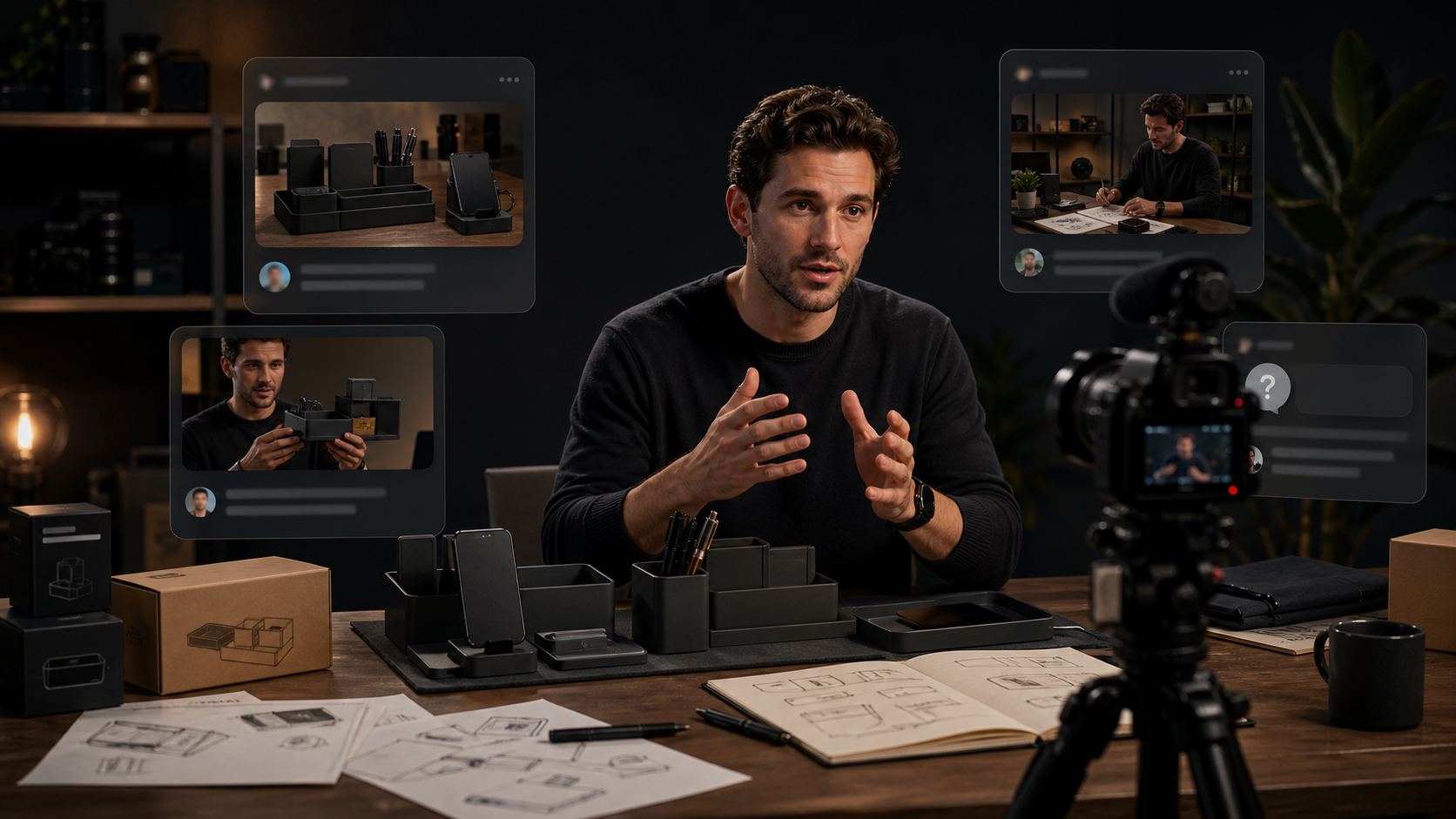
Founder-led content is content where the founder becomes a visible source of product explanation, brand story, customer insight, and category point of view.
It can take many forms:
- founder videos
- product explainers
- launch posts
- behind-the-scenes stories
- customer question responses
- founder POV posts
- product education carousels
- short-form social videos
- founder-led ads
- brand story content
The goal is not to make the founder famous for the sake of it. The goal is to make the brand easier to trust and the product easier to understand.
Why D2C brands need trust faster
D2C brands do not always have the same trust layer as large retail brands.
A customer may not have seen the product in a store. They may not know the founder. They may not know whether the reviews are reliable. They may be comparing the product against cheaper alternatives, marketplace copies, or established category leaders.
That means the brand has to create trust quickly.
Founder-led content helps because it gives customers a clearer answer to questions like:
- Who is behind this product?
- Why did they make it?
- What do they understand about my problem?
- What makes this product different?
- What standards does the brand care about?
- What should I know before buying?
When the founder answers those questions directly, the brand feels less faceless.
That trust angle lines up with current brand research too. Edelman’s latest brand trust reporting reinforces how belief, relevance, and confidence shape brand decisions. See Edelman Brand Trust 2025.
Reason 1: The founder can explain the why
Most product marketing explains what the product is.
Founder-led content can explain why the product exists.
That matters because customers often remember stories and decisions more than feature lists.
For example, a founder can say:
"We created this travel pouch because customers told us they hated carrying four separate small organizers. The goal was not to add more compartments. It was to make the pouch easier to use with one hand while standing in an airport security line."
That is stronger than:
"Multi-compartment travel pouch with premium build quality."
The feature is the same. The founder-led version gives the product a reason.
Reason 2: D2C products often need education
Many D2C products are not instantly obvious.
A customer may need help understanding:
- how to use the product
- which variant to buy
- what makes the product different
- what the product is not meant for
- how it compares to alternatives
- how to avoid common usage mistakes
- why the price is justified
Founder-led content works because it can turn product education into a conversation.
Instead of sounding like a manual, the founder can explain the product like a person who has seen the problem closely.
Reason 3: Founder-led content makes tradeoffs visible
Every good product has tradeoffs.
A brand may choose a more expensive material, a slower manufacturing process, a simpler formula, a more durable component, or a narrower product range.
Most product pages hide those decisions. Founder-led content can make them visible.
Examples:
- "We chose this fabric because it holds shape better after repeated washing."
- "We kept the formula fragrance-free because many customers told us scent was a dealbreaker."
- "We removed this feature because it made the product harder for beginners."
- "We used a heavier cap because customers complained about leaks."
When customers understand tradeoffs, they understand value.

Reason 4: It turns customer insight into content
The best founder-led content does not begin with "what should I post today?"
It begins with customer insight.
Useful founder-led content often comes from:
- sales calls
- customer reviews
- support tickets
- marketplace questions
- product returns
- DMs
- comments
- objections heard repeatedly
- failed product experiments
- launch feedback
A founder can turn those raw insights into content that feels relevant because it comes from actual customer friction.
For example:
Customer objection: "Is this bag too small for daily use?"
Founder-led content: "Here is exactly what fits inside the bag, what does not, and who should choose the larger size."
That is more useful than another lifestyle image with a vague caption.
Reason 5: Founder-led content helps launches feel more human
Product launches are a natural fit for founder-led content.
A launch is not just the moment a product becomes available. It is the moment the brand explains why the product deserves attention.
Founder-led launch content can cover:
- why the product was created
- what customers asked for
- what changed during development
- what was difficult to solve
- how the final version improved
- who the product is best for
- what customers should check before buying
This makes the launch feel less like an announcement and more like a story.
Reason 6: It gives the brand a point of view
Generic brands say generic things.
Founder-led brands can say specific things.
A founder can take a point of view on the category:
- "Skincare routines should be easier to understand."
- "Home fitness products should work for beginners, not only athletes."
- "Marketplace images should explain the product, not just decorate the listing."
- "Parents should not need a chemistry degree to understand baby product claims."
A clear founder POV gives the brand a sharper identity.
The goal is not controversy. The goal is clarity.
Founder-led content vs brand-led content
Founder-led content should not replace brand-led content. It should strengthen it.
| Area | Founder-led content | Brand-led content |
|---|---|---|
| Voice | Personal, direct, human | Consistent, polished, brand-level |
| Best for | Trust, story, explanation, POV | Memory, campaigns, product pages, repeatable identity |
| Strength | Makes the brand feel real | Makes the brand feel consistent |
| Risk | Too dependent on one person | Too generic or faceless |
| Best use | Product education, launches, behind the scenes | Always-on marketing, landing pages, ads, brand systems |
The best D2C brands use both.
Founder-led content creates human trust. Brand-led content turns that trust into a consistent identity.
Founder-led content vs UGC
Founder-led content and UGC are not the same.
UGC usually shows how customers or creators experience the product. Founder-led content explains why the product exists and what the brand believes.
| Question | Founder-led content | UGC |
|---|---|---|
| Who creates it? | Founder or founding team | Customer, creator, or user |
| Main strength | Product explanation and founder trust | Social proof and real-world usage |
| Best for | Launches, education, positioning, founder story | Reviews, demos, reactions, creator-style proof |
| Limitation | Needs founder availability and review | May lack brand control or product accuracy |
| Ideal use | Explain why the product matters | Show how people use it |
For ecommerce brands, founder-led content and UGC work best together.
The founder explains the product. The customer or creator shows the product in use.
Sprout Social’s UGC guide is useful here because it frames UGC as credibility and real-world proof, which is complementary rather than identical to founder explanation. See Sprout Social on UGC.

Founder-led content examples for D2C brands
| Product category | Founder-led content idea |
|---|---|
| Skincare | "Why we made this formula fragrance-free." |
| Apparel | "The fit issue we kept hearing from customers and how we fixed it." |
| Food and beverage | "How we tested the final flavor before launch." |
| Home products | "Why we changed the material after prototype testing." |
| Fitness | "Who this product is for and who should skip it." |
| Baby products | "The safety decision we refused to compromise on." |
| Marketplace products | "How to choose the right variant before buying." |
| Electronics accessories | "The compatibility mistake customers should avoid." |
The founder-led content flywheel
Founder-led content works best as a repeatable system.
Here is a simple flywheel:
- Listen to customers.
- Identify a repeated question, objection, or product insight.
- Add the founder’s point of view.
- Connect it to a real product detail.
- Turn it into a post, video, carousel, launch story, or ad.
- Review for claims, accuracy, and brand tone.
- Publish, learn, and reuse the insight in future content.
This prevents founder-led content from becoming random inspiration posts.
It also keeps the content tied to what matters: customers, products, and trust.
The scaling part matters too. Refine Labs and The B2B Playbook both point toward the same core lesson: founder-led content becomes stronger when it is systemized instead of staying dependent on founder energy alone. See Refine Labs and The B2B Playbook.
What makes founder-led content weak?
Founder-led content fails when it becomes performative.
Common mistakes include:
- talking about the founder more than the customer
- sharing opinions with no product connection
- making exaggerated claims
- posting inconsistently
- copying generic LinkedIn founder content
- using AI to invent a voice the founder does not actually have
- turning every post into a sales pitch
- skipping review for product accuracy
The strongest founder-led content is specific, useful, and grounded in real product thinking.
When founder-led content is not enough
Founder-led content cannot compensate for everything.
It will not fix:
- poor product quality
- weak fulfillment
- confusing pricing
- bad customer support
- misleading claims
- unclear product-market fit
- generic creative
- inconsistent brand experience
It can create attention and trust, but the product and customer experience have to carry that trust forward.
Founder-led content should open the door. The product still has to walk through it.
How AI can help founder-led content without making it fake
AI can help founders create more content from the ideas they already have.
Useful AI-assisted workflows include:
- turning founder notes into post drafts
- turning product details into founder-led scripts
- creating product launch content variations
- converting customer objections into educational posts
- planning founder-led campaign themes
- generating founder image or video concepts
- adapting one founder idea into social posts, carousels, and short scripts
The key is grounding.
AI should work from real founder POV, real brand context, and real product details. It should not invent beliefs, claims, customer results, or founder experiences.
Human review still matters.
Before publishing founder-led content, teams should check:
- Is the product detail accurate?
- Are the claims safe?
- Does the tone sound like the founder?
- Is the content useful to the customer?
- Does it fit the channel?
- Does it match the brand’s standards?
That caution also reflects the broader social environment. Sprout Social’s current reporting shows that brands are experimenting with AI heavily, while audiences still want content that feels more human-created and trustworthy. See Sprout Social State of Social Media 2026.
How AgenixSocial helps D2C brands create founder-led content
AgenixSocial helps D2C founders turn founder POV, Brand DNA, product catalog context, and campaign goals into repeatable founder-led content.
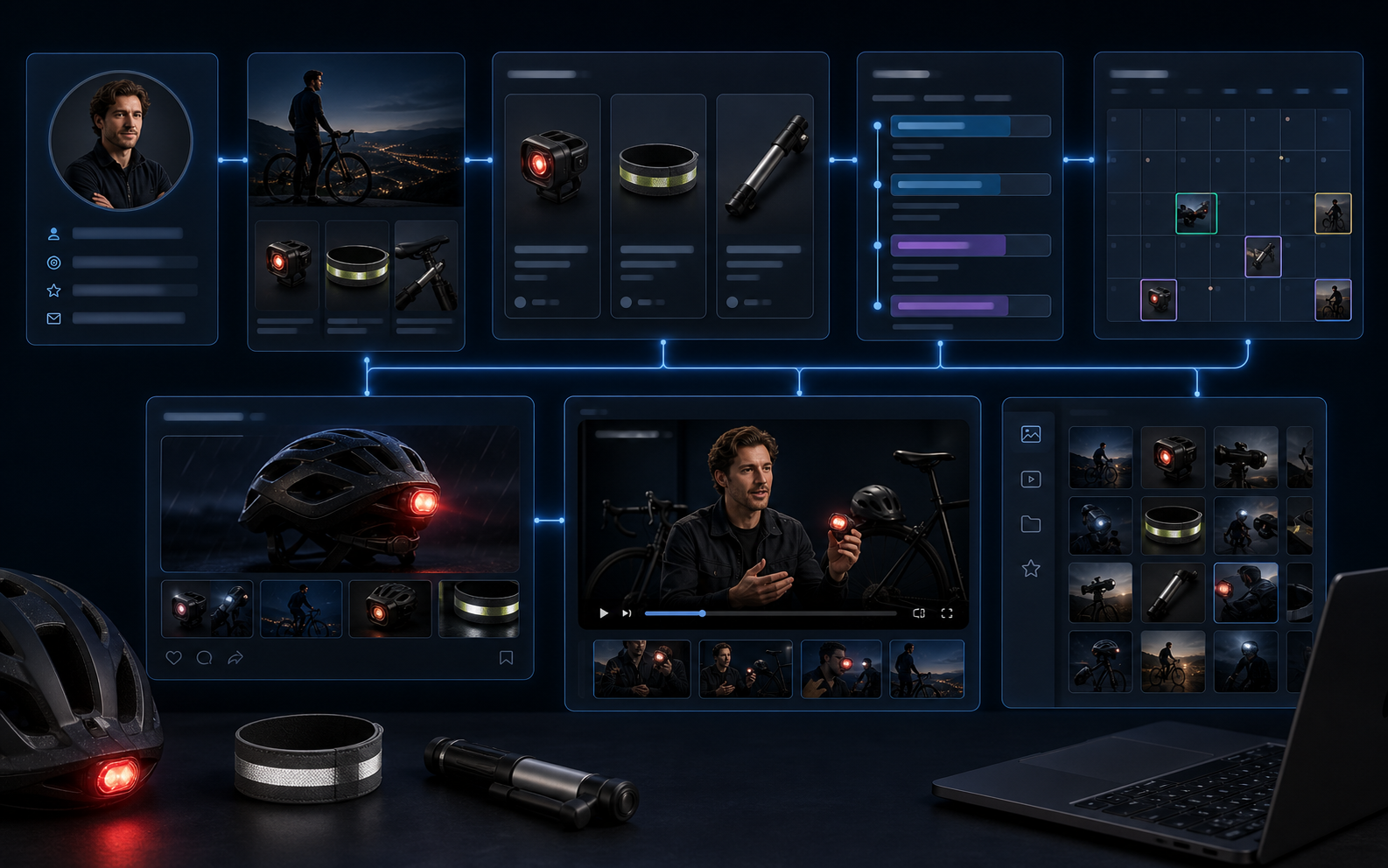
Founder Studio supports founder-led images and videos from founder profiles. A founder can upload a headshot and optionally add a short voice sample for video workflows. The product includes consent before founder face and voice setup.
But the larger advantage is context.
AgenixSocial connects founder-led content to:
- Brand DNA, so the content stays aligned with the brand
- Products, so content is grounded in what the brand actually sells
- Campaigns, so founder content can support launches and brand moments
- AI Creator Videos, so product stories can become avatar-led or creator-style videos where relevant
- Media Library, so assets can be saved, organized, and reused
- Calendar and approvals, so content can be reviewed and scheduled before publishing
This helps teams move from "the founder should post more" to a practical content workflow.
Founder-led content checklist for D2C brands
Before creating founder-led content, ask:
- What customer problem are we addressing?
- What product detail supports the point?
- What does the founder believe about this?
- Is this useful beyond "look at our product"?
- Is the claim accurate?
- Can this become a post, video, carousel, launch story, or ad?
- Does it sound like the founder?
- Does it still match the brand?
- What should the customer do next?
If the content cannot answer those questions, it may not be ready.
Conclusion
Founder-led content works for D2C brands because it makes products easier to understand and brands easier to trust.
Customers want to know what a product does, why it exists, who made it, and what decisions shaped it. Founder-led content gives them that context in a human voice.
But founder-led content should not be random. It should be a repeatable system built around customer insight, product truth, founder POV, brand consistency, and careful review.
AgenixSocial helps D2C teams build that system by connecting Founder Studio with Brand DNA, product catalog context, campaigns, media workflows, approvals, and scheduling. The result is founder-led content that starts from the brand and product, not from a blank prompt.