AI UGC Ads: Hooks, Scripts, and Review Checklist
Quick answer
AI UGC ads are creator-style product ads made with AI avatars, scripts, voices, scenes, captions, and product context. Good AI UGC ads do not start with generic product praise. They start with a product-specific hook, a believable script, a clear use case, safe claims, and a review step before publishing.
The first few seconds matter.
But the hook still needs to be honest, specific, and believable.
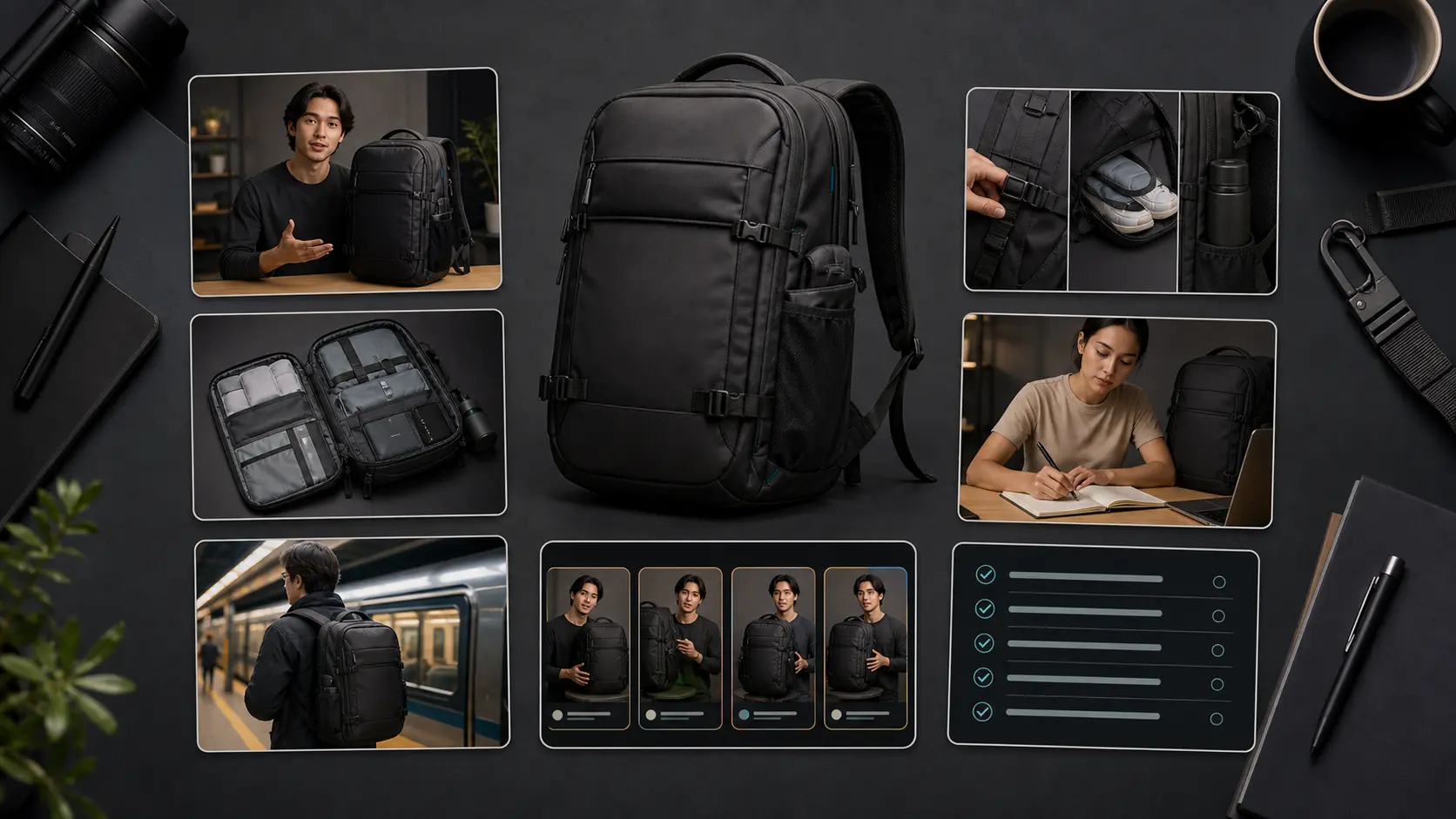
If you want the product workflow behind this topic, see AI Creator Videos. If you want the broader brand and product context layer first, start with Brand DNA and Campaigns.
Why most AI UGC ads feel fake
Most weak AI UGC ads fail for one of five reasons:
- The hook sounds like a recycled template.
- The script praises the product without showing a real use case.
- The avatar or creator setup does not match the product, audience, or setting.
- The claim is too broad, too exaggerated, or unsupported.
- The video feels like a fake testimonial instead of product-led creator content.
The problem is usually not the avatar alone.
A realistic avatar with a weak script still creates a weak ad.
A polished AI video with a generic product claim still feels generic.
A fast-generated ad with no review still creates risk.
Good AI UGC ads need structure.
Creatify’s category writeups keep coming back to the same basic idea: UGC-style content works when it feels relatable, natural, and grounded in how people actually talk about a product, not when it sounds like a polished commercial pretending to be casual. That pattern is useful here, even if you are using AI to draft the creative layer instead of hiring a creator directly. Source
What is an AI UGC ad?
An AI UGC ad is a creator-style video ad made with AI tools. It may use an AI avatar, AI-generated script, AI voice, product visuals, captions, custom scene direction, and language selection.
For ecommerce brands, AI UGC ads are best used for:
- product explainers
- hook testing
- ad variations
- launch campaigns
- marketplace videos
- localized product ads
- seasonal campaign assets
- short-form product education
They should not be used to fake real customer testimonials.
That line matters.
AI UGC ads are useful when they help a brand explain, test, localize, and repeat product-led messages. They become risky when they pretend to be real customer proof.
Running example: premium modular travel backpack
To keep this guide practical, let’s use one product all the way through:
Product: premium modular travel backpack.
Assume the backpack has:
- a clean commuter-friendly design
- a padded laptop compartment
- modular storage sections
- a layout that works for office days and short trips
- premium materials
- compact but organized structure
The exact claims should always match the real product.
If the backpack is not water-resistant, do not say it is.
If it does not fit a 16-inch laptop, do not say it does.
If it has not been tested for airline under-seat fit, do not state that as a fact.
This example is about ad structure, not inventing product benefits.
The anatomy of a good AI UGC ad
A useful AI UGC ad usually has five parts:
| Part | What it needs to do |
|---|---|
| Hook | Stop the scroll and frame the angle fast |
| Product context | Make it obvious what the product is |
| Use case | Show when, where, or why it matters |
| Specific benefit | Give one believable reason to care |
| CTA | Tell the viewer what to do next |
A bad AI UGC ad tries to say everything.
A good AI UGC ad chooses one clear angle.
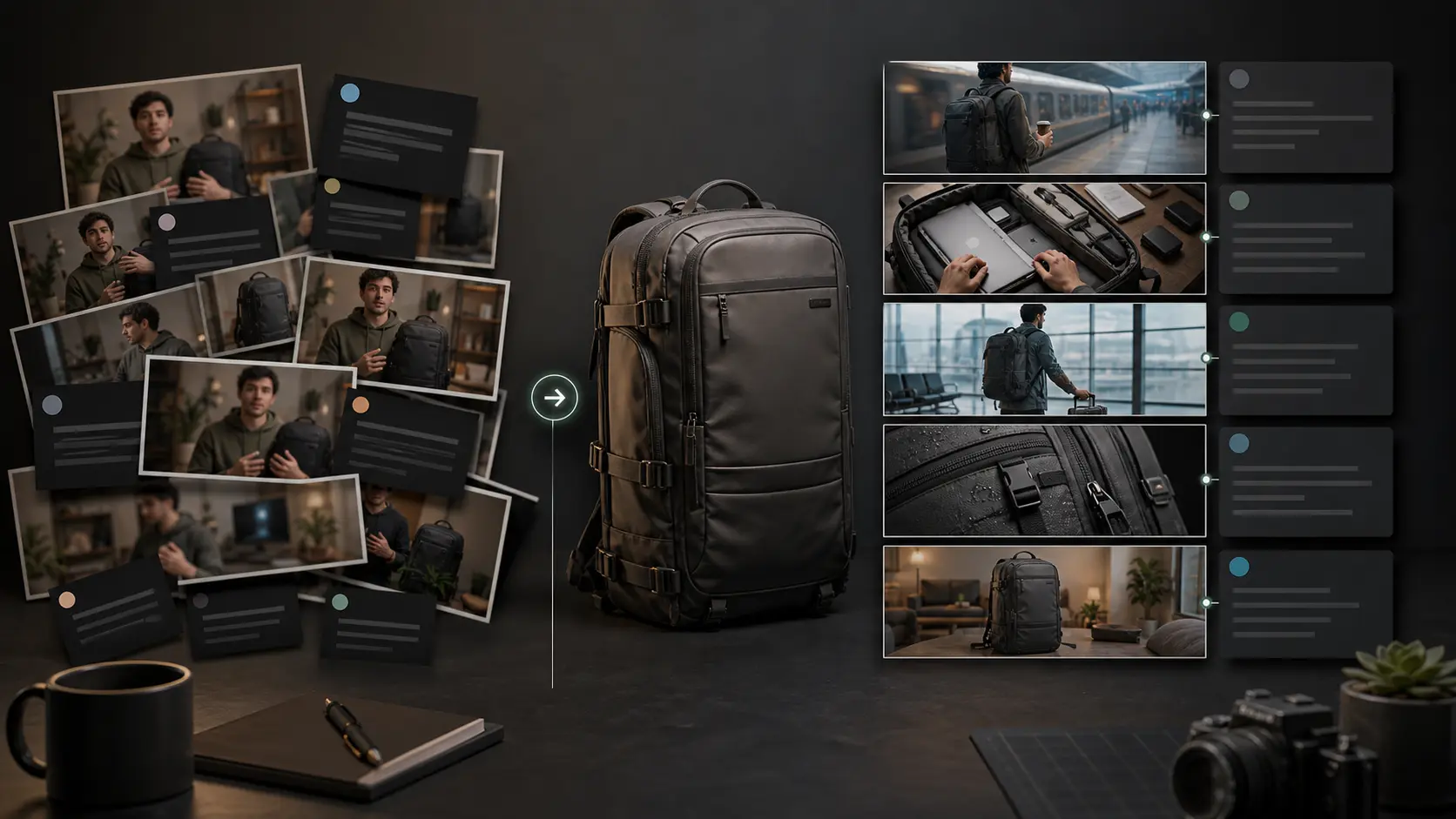
Hook types that work better than generic praise
Hooks are not random attention-grabbing lines.
The best hooks connect directly to a buyer problem, product moment, or real use case.
| Hook type | Backpack example |
|---|---|
| Routine hook | "This is the bag I use when my day goes from office to airport." |
| Problem-solution hook | "I stopped carrying two bags because this one keeps work and travel items separated." |
| Product discovery hook | "I wanted a backpack that did not look bulky but still had real compartments." |
| Before-after hook | "My old backpack was one big pocket. This one actually keeps everything organized." |
| Use-case hook | "If you carry a laptop, charger, notebook, and travel extras, this layout makes sense." |
| Frustration hook | "I hate digging through my bag at airport security, so this setup helps." |
| Founder-style hook | "We designed this for people who move between office days and short trips." |
| Soft CTA hook | "If your bag is always a mess, this is worth a look." |
The hook should sound like something a person might really say.
Not like an ad pretending to act human.
Hook framework 1: Problem -> Product moment -> CTA
Use this when the buyer already feels a clear frustration.
Formula: problem -> product moment -> specific benefit -> soft CTA
Example:
"I used to carry one laptop bag and one extra pouch for everything else. This backpack keeps my laptop, charger, notebook, and travel items in separate sections, so I do not have to unpack the whole bag every time. If your work bag is always messy, this is worth checking out."
Why it works:
- it starts with a real problem
- it moves quickly into the product moment
- it names a specific benefit
- it avoids exaggerated claims
- it ends with a low-pressure CTA
Hook framework 2: Routine -> Product -> Benefit
Use this for lifestyle and everyday-use ads.
Formula: routine -> product appearance -> use case -> benefit
Example:
"Most days I go from desk to cafe to evening errands. I like this backpack because it does not look oversized, but it still keeps my laptop, charger, and daily stuff organized."
Why it works:
- it is easy to picture
- it sounds more natural than a hard sell
- it connects the product to real life
Hook framework 3: Frustration -> Comparison -> Better fit
Use this when the buyer is actively disappointed with what they use now.
Formula: frustration -> what is wrong with the old option -> better product fit
Weak version:
"This backpack is amazing and perfect for everyone."
Better version:
"Most backpacks either look too sporty for work or too small for travel gear. This one feels more balanced because it keeps the cleaner office look but still has separate sections for trip essentials."
The better version wins because it narrows the promise. It sounds more believable.
The difference between a weak script and a better script
Here is where many AI UGC ads break.
They start with a workable hook, then collapse into generic compliments.
Weak script
"I am obsessed with this backpack. It is stylish, high quality, and perfect for all your needs. You can use it for work, travel, school, and more. I definitely recommend it."
What is wrong with it:
- "obsessed" is generic and overused
- no real use case is shown
- the benefits are vague
- "perfect for all your needs" sounds fake
- it could describe almost any backpack
Better script
"I wanted one bag that could handle office days and short trips without looking bulky. This one has a separate laptop section, easy-to-reach storage for chargers and small items, and a layout that feels more organized when I am moving through airports or coworking spaces. If you need a cleaner everyday travel bag, this one makes sense."
Why this version is stronger:
- the buyer situation is clear
- the product details are visible
- the benefit is believable
- the CTA fits the tone
A practical script structure for AI UGC ads
You do not need a huge script.
Most AI UGC ad scripts work better when they stay focused.
Use this simple structure:
- Hook
- Product context
- Use case
- One or two specific benefits
- CTA
Here is a simple example for the backpack:
Hook: "If your work bag turns into a dumping ground by noon, this is worth seeing."
Product context: "This is a modular travel backpack built for daily carry plus short trips."
Use case: "I use it when I need my laptop, charger, notebook, headphones, and a few travel extras in one place."
Specific benefits: "The layout keeps things separated, and it still looks clean enough for office use."
CTA: "If you want one bag that covers both, take a look."
That is enough.
The goal is not to squeeze every feature into one clip.
The goal is to sell one angle clearly.
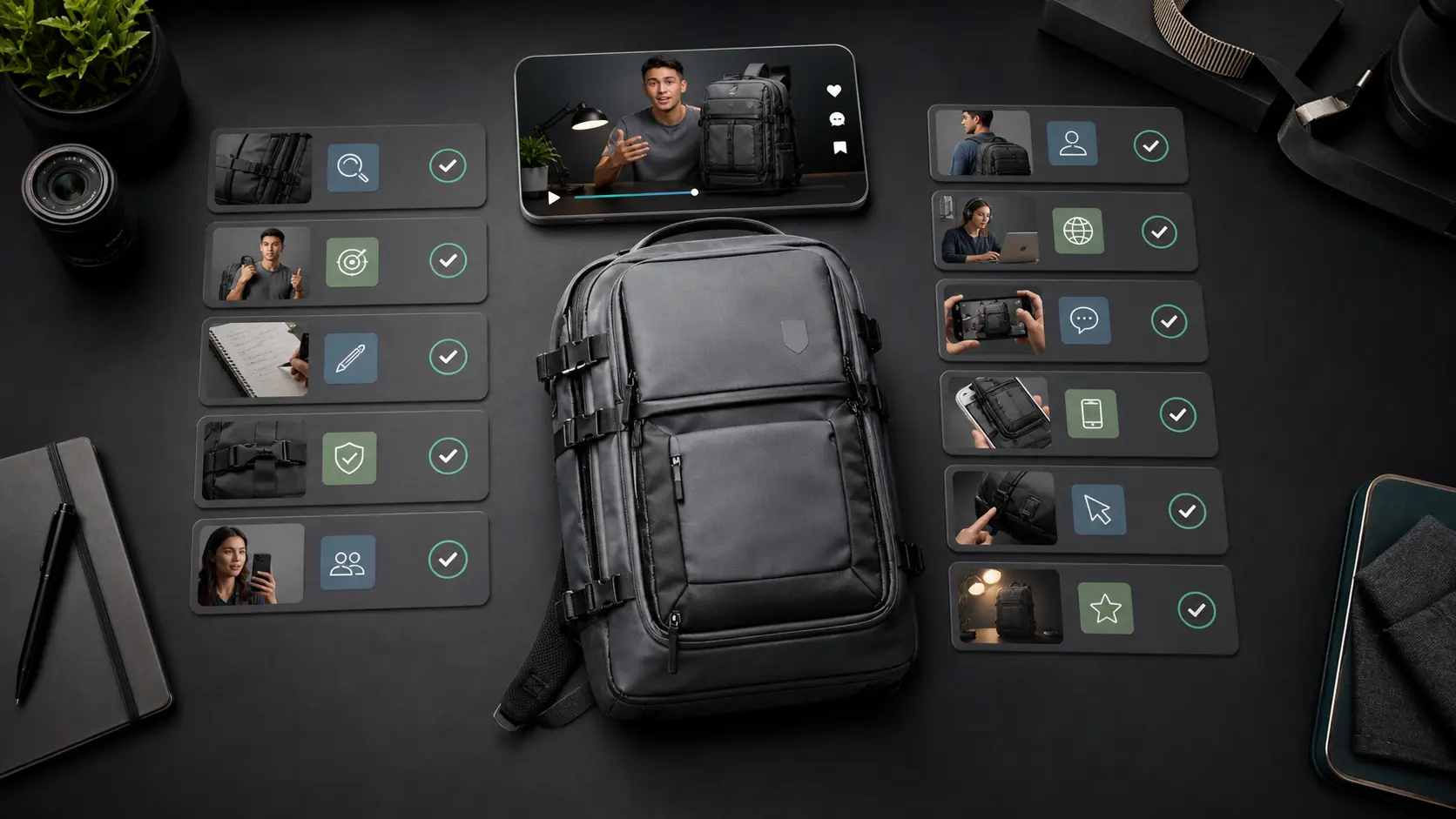
Match the creator setup to the product
AI UGC ads do not fail only on copy.
They also fail when the visual setup feels wrong for the product.
For the backpack example:
- a commuter or travel context makes sense
- a clean desk, airport, cafe, or hallway scene makes sense
- a luxury fashion studio might feel too detached from the product’s daily-use pitch
- a hyper-gaming room setup may confuse the message unless that is the real target audience
The creator setup should support the script angle.
If the line is about moving from office to airport, the scene should help that story.
If the line is about organization, the bag layout should be visible.
If the line is about premium material feel, close-up product shots matter more.
This is where product-led workflows matter. The video should start from the product and use case, not from an avatar template alone.
How to adapt one idea across Meta, TikTok, and landing pages
One script should not be copied everywhere without adjustment.
The product angle can stay the same, but the presentation should change by surface.
| Surface | What to emphasize | Better style |
|---|---|---|
| Meta ads | Fast pain point, clear product benefit, direct CTA | Tight, benefit-led, quick proof |
| TikTok | Native voice, slightly looser energy, visual progression | Creator-style, less corporate, more scroll-native |
| Reels | Clean hook, lifestyle fit, visual rhythm | Short, polished but still human |
| Product page or landing page | Clarity, product understanding, trust | More explanatory, less hook-heavy |
| Marketplace video | Product details, layout, features, setup | Utility-led, simple, direct |
This matters because the same product can need different creative jobs.
One video is trying to stop the scroll.
Another is trying to reduce hesitation.
Another is helping the buyer understand the product before purchase.
Where AgenixSocial fits
AgenixSocial’s angle here should stay simple and honest.
The value is not "click a button and get a perfect ad."
The value is:
- product-aware video starting points
- script generation and editing
- creator-style video setup
- product selection before generation
- support for multiple languages
- broader brand and product context through Brand DNA
That makes the workflow stronger than a generic talking-head generator because the creative can start from actual product context and a reusable brand layer.
If you want the product page, go to AI Creator Videos. If you want the product import and reusable context layer, see Brand DNA and How to Sync Your Shopify Product Catalog to AI Generation Engines in 1 Click.
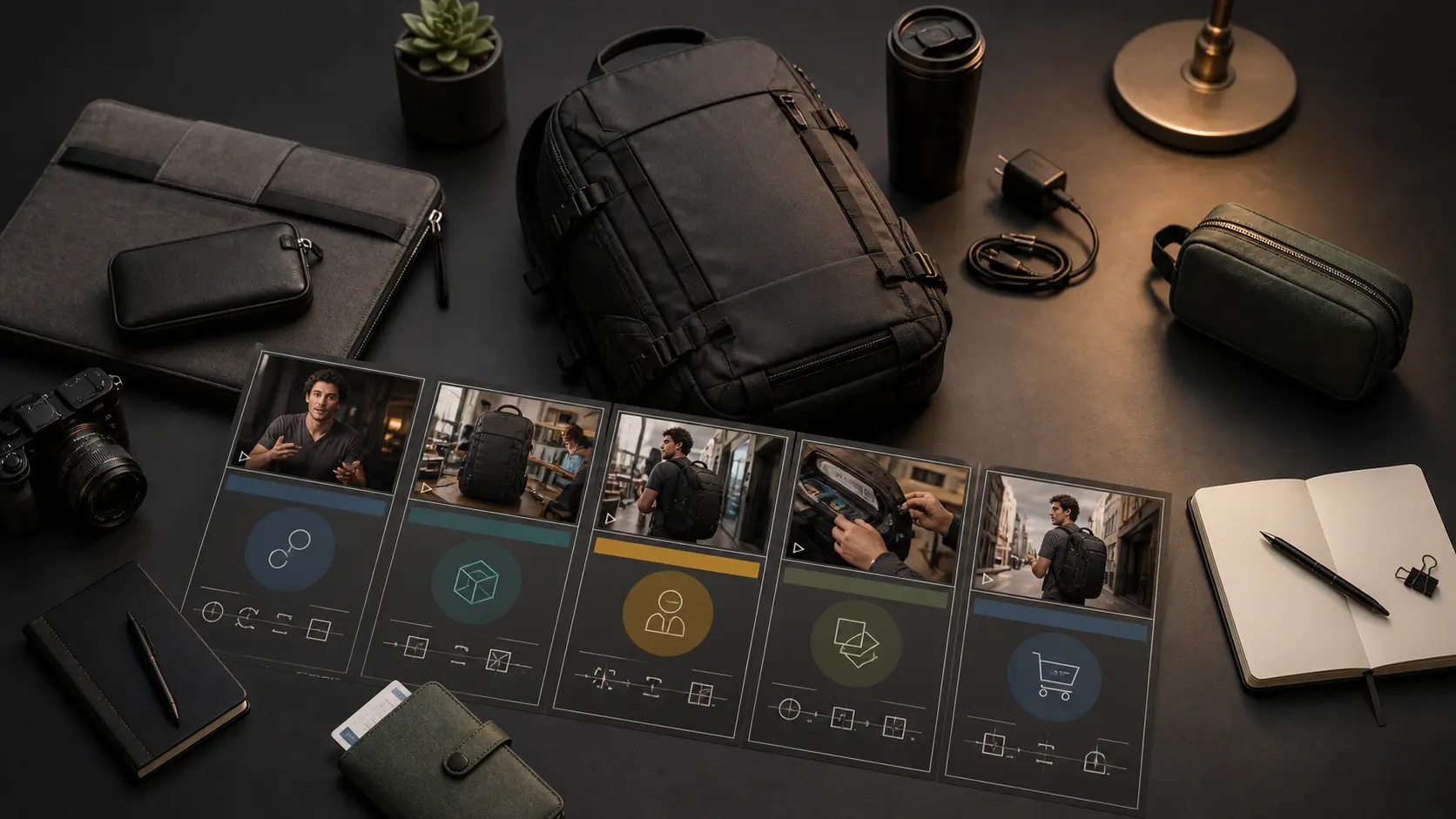
Review checklist before publishing an AI UGC ad
This is the part many teams skip.
They generate quickly and publish too quickly.
That is where avoidable bad ads come from.
Use this checklist before anything goes live.
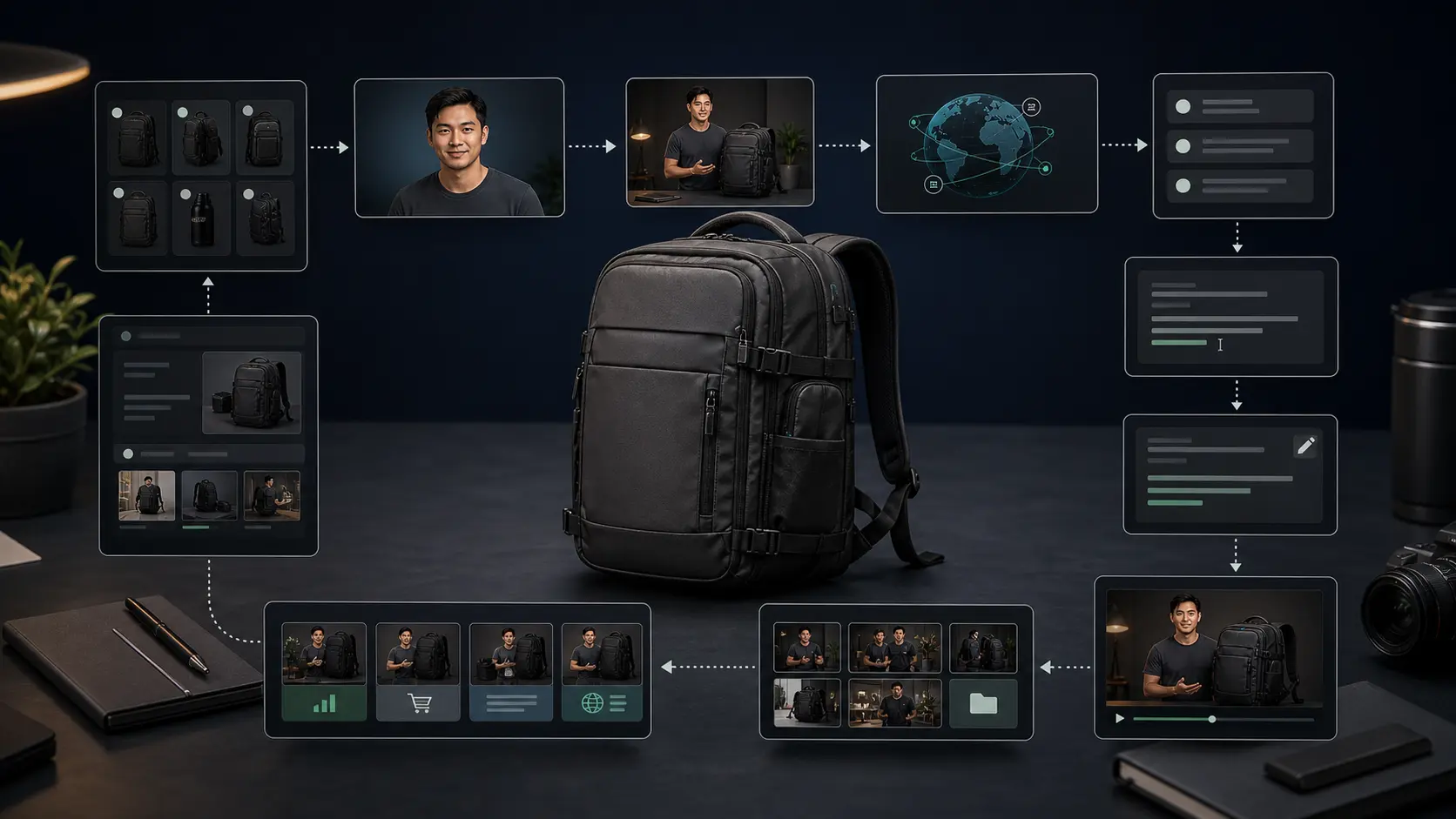
1. Hook review
Ask:
- does the hook match a real buyer problem or use case?
- does it sound natural?
- does it avoid empty hype?
- is it specific to this product?
2. Product accuracy review
Ask:
- are the named features real?
- are the product dimensions, compatibility claims, or fit claims accurate?
- does the video show the product in a way that matches reality?
3. Claim review
Ask:
- are we making claims we can support?
- are we implying outcomes we cannot prove?
- are we using words like "best," "guaranteed," or "perfect" without support?
4. Trust review
Ask:
- does this look like fake customer proof?
- does the script imply a real personal experience that did not happen?
- are we presenting a synthetic testimonial like it came from a real buyer?
5. Creator and scene review
Ask:
- does the creator fit the product and audience?
- does the setting support the message?
- do captions, pacing, and visuals feel natural enough for the channel?
6. CTA review
Ask:
- is the CTA clear?
- is it too aggressive for the script tone?
- does it fit the actual destination, offer, or landing page?
The fake-testimonial warning is not optional
This part is important enough to say plainly.
Do not use AI UGC ads to invent customer proof.
The FTC has published business guidance on the consumer reviews and testimonials rule, and it also announced the 2024 final rule banning fake reviews and testimonials. The FTC announcement specifically says the rule is meant to deter AI-generated fake reviews. That is highly relevant to AI creator-style advertising because the line between "creator-style ad" and "fake testimonial" can get blurry fast if teams are careless. FTC Q&A and FTC announcement
So if your ad script sounds like:
"I bought this last month and it changed my travel routine"
but that is not a real person speaking from a real experience, you should stop and review it.
A safer pattern is:
- creator-style product explanation
- founder-style explanation
- feature walkthrough
- use-case framing
- product comparison without invented personal claims
That keeps the ad more honest and easier to defend.
A reusable AI UGC ad template
If you want a simple template for product-led creative, use this:
Hook
"If you struggle with [specific problem], this is worth a look."
Product context
"This is a [product type] built for [specific use case]."
Use case
"I’d use it for [real scenario]."
Specific benefits
"It helps because [benefit 1] and [benefit 2]."
CTA
"If you want [outcome], check it out."
For the backpack:
"If your work bag turns into a mess every day, this is worth a look. This is a modular travel backpack built for office days and short trips. It keeps a laptop, charger, notebook, and smaller items in separate sections, so it feels easier to carry one bag instead of two. If you want a cleaner everyday travel setup, check it out."
That is a better starting point than:
"This backpack is amazing and you need it now."
Final take
Good AI UGC ads are not created by picking an avatar and asking it to praise the product.
They work when the hook, use case, setting, and product claim all line up.
That means:
- start with the product
- choose one angle
- make the hook specific
- keep the script believable
- avoid fake-proof language
- review before publishing
That is how AI UGC ads become useful creative assets instead of generic synthetic noise.
If you want a product-aware workflow for this inside AgenixSocial, start with AI Creator Videos and connect the broader product and brand layer through Brand DNA.