AI Brand Consistency Checklist for D2C and Marketplace Brands
Quick answer
AI brand consistency means every AI-generated image, video, ad, marketplace asset, campaign post, caption, and script still feels like the same brand while staying product-accurate, visually aligned, claim-safe, and channel-appropriate. For ecommerce brands, consistency is not only tone of voice. It is brand voice, product truth, visual style, marketplace fit, campaign logic, and human review working together.
The real test of AI brand consistency is not whether one output sounds good.
It is whether every product image, creator video, marketplace asset, campaign post, and ad still feels like the same brand.
If you want the foundation behind this topic, start with Brand DNA. If you want to see where consistent output gets reused later, look at Product Shots, AI Creator Videos, Marketplace Listing Studio, Amazon A+ Studio, and Campaigns.
Why AI brand consistency is harder for ecommerce brands
A normal brand consistency checklist usually focuses on:
- logo
- color
- typography
- tone of voice
- messaging
- layout
That still matters.
But ecommerce teams using AI need a wider review system because AI-generated ecommerce content is not only text.
It can include:
- product shots
- AI creator videos
- image ads
- marketplace listing images
- Amazon A+ content
- product scripts
- founder-led content
- campaign posts
- carousel slides
- multilingual versions
- downloadable assets
Each content type can drift differently.
A caption can sound off-brand.
A product image can look visually wrong.
A creator video can use the wrong script tone.
A marketplace asset can explain the product poorly.
A campaign can feel inconsistent across days.
A localized version can sound unnatural.
A product claim can become exaggerated.
That is why AI brand consistency needs a proper checklist instead of a vague “make it sound like us” instruction.
What AI brand consistency means
AI brand consistency is the practice of reviewing AI-generated content against the brand’s reusable context before publishing.
For ecommerce brands, this includes:
- brand voice
- visual identity
- product catalog context
- product image accuracy
- buyer relevance
- claim safety
- channel fit
- marketplace readiness
- campaign consistency
- localization quality
- reusable asset organization
- human approval
The goal is not to make every asset identical.
The goal is to make every asset feel like it belongs to the same brand while still doing the right job for the channel.
Consistency does not mean sameness.
A Meta ad, marketplace listing image, AI creator video, and Amazon A+ module should not look identical.
But they should still feel like the same brand.
Marq’s brand consistency guidance defines the bigger customer-facing problem well: brands need to show up with the same identity, message, and experience across touchpoints. That broader definition becomes even more important once AI starts generating assets at scale. Marq
Storyteq’s AI content discussion makes a similar point from the AI side: consistency improves when AI is working from structured brand inputs and review systems instead of one-off instructions. Storyteq
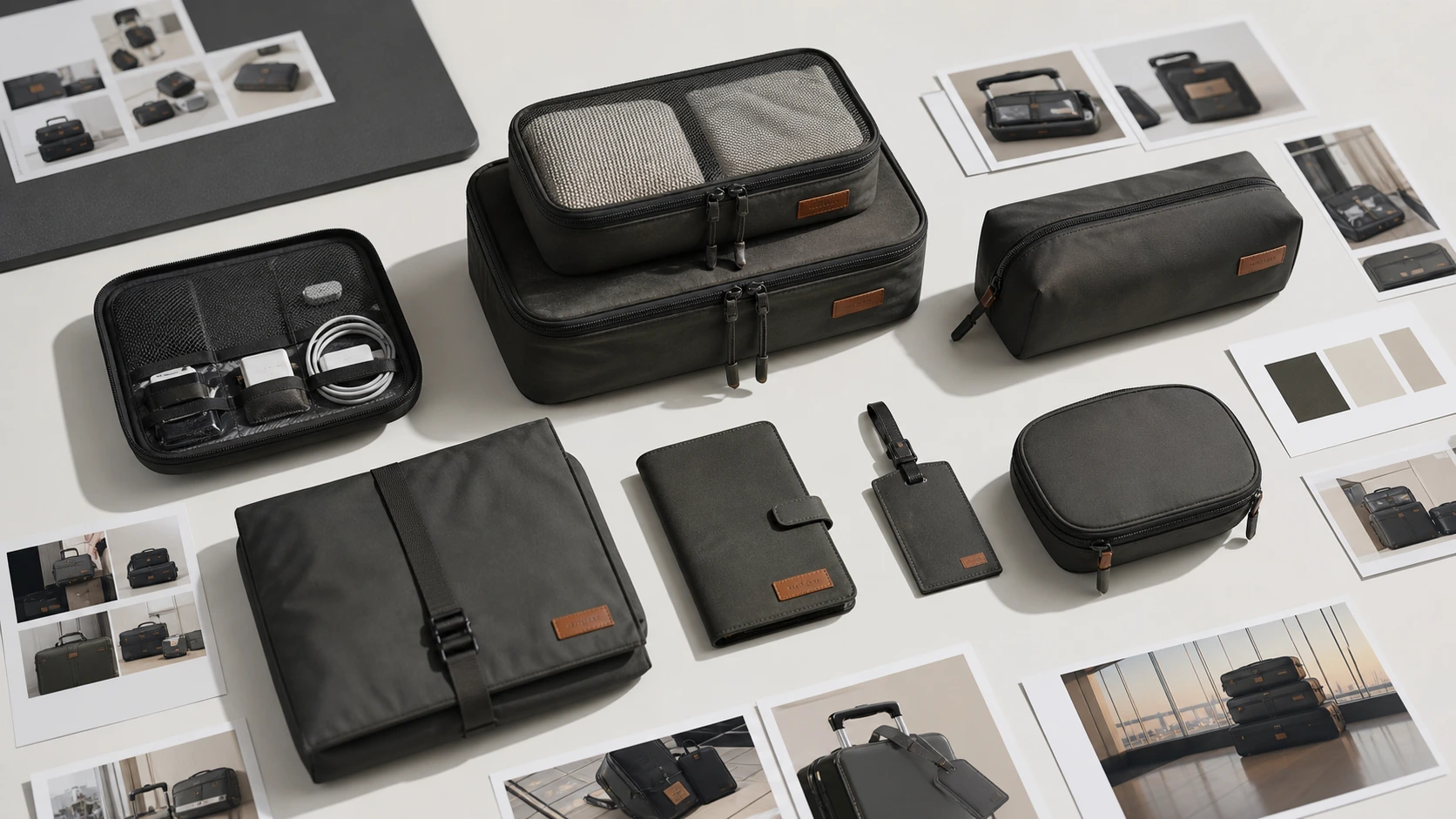
Running example: premium travel accessories brand
For this article, let’s use a fresh product universe:
Brand: a fictional premium travel accessories brand.
Product catalog:
- packing cubes
- passport wallet
- luggage tag
- toiletry pouch
- cable pouch
- travel organizer
- compact garment folder
Brand position:
- practical
- premium
- organized
- travel-friendly
- calm
- modern
- not flashy
- not discount-heavy
- not adventure-extreme
Buyer:
- frequent travelers
- business travelers
- family travelers
- digital workers
- organized packers
- gifting buyers
This example works well because it spans D2C, marketplace, ads, product images, product videos, and campaigns without borrowing the home-office setup from the last Brand DNA article.
The AI brand consistency checklist
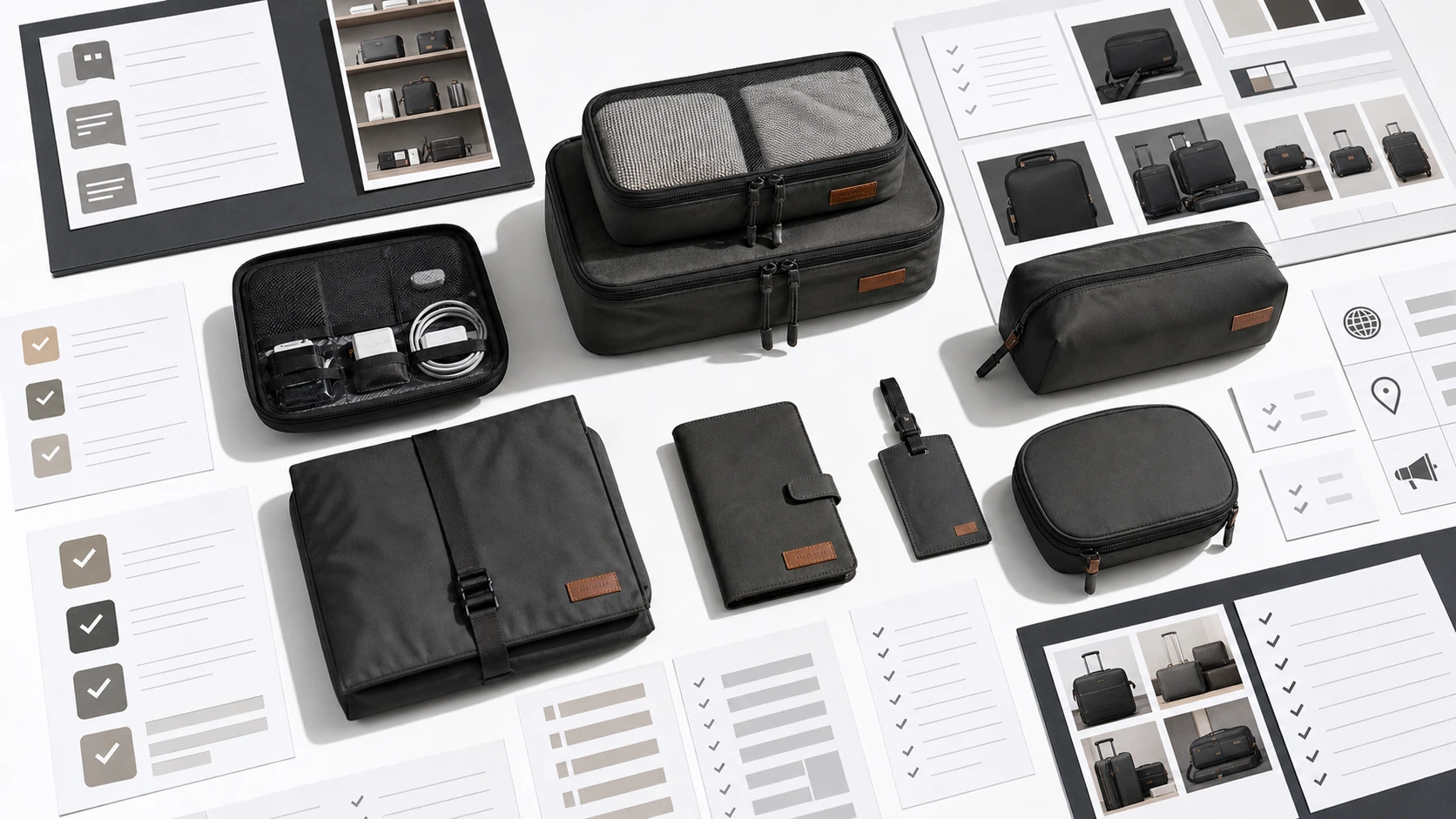
Use this checklist before publishing AI-generated ecommerce content.
| Checklist area | What to review |
|---|---|
| Brand voice | Does the copy sound like the brand? |
| Product accuracy | Does the content describe and show the correct product? |
| Visual identity | Do images and videos match the brand’s visual world? |
| Product catalog context | Is the output grounded in real product names, images, and descriptions? |
| Buyer relevance | Is the message useful to the intended buyer? |
| Claim safety | Are claims true, supportable, and not exaggerated? |
| Channel fit | Does the asset suit the platform or workflow? |
| Marketplace readiness | Is the content clear, product-first, and reviewable for listing use? |
| Campaign consistency | Do campaign assets connect as one story? |
| Localization quality | Does the content sound natural in the selected language or market? |
| Asset reuse | Is the asset organized for future use? |
| Human approval | Has someone reviewed it before publishing? |
This is the baseline.
Now let’s break it down.
1. Brand voice consistency
Brand voice consistency means the content sounds like the same brand across channels.
For the travel accessories brand, the voice may be:
- calm
- practical
- organized
- useful
- premium but not flashy
- clear without being boring
- helpful without sounding corporate
Good brand voice:
"Keep travel documents, cables, and small essentials in one place before the trip starts."
Weak brand voice:
"Transform your journey with the ultimate travel lifestyle solution."
The weak version sounds like generic travel marketing.
The better version is specific and practical.
Brand voice checklist
Ask:
- Does this sound like our brand?
- Is the tone too generic?
- Is it too playful, too corporate, too luxury, or too discount-heavy?
- Does it use words our brand would actually use?
- Does it avoid words our brand should avoid?
- Does it still fit the channel?
2. Product accuracy consistency
Product accuracy is where many AI-generated ecommerce assets fail.
The AI may create something polished while still:
- showing the wrong product
- inventing a feature
- mentioning the wrong material
- assuming the wrong size
- exaggerating the benefit
- describing a variant that does not exist
- using the wrong use case
For the travel accessories brand:
If the product is a cable pouch, do not describe it as a toiletry pouch.
If the product is a passport wallet, do not say it fits every currency and document type unless that is true.
If the product is a compact garment folder, do not claim wrinkle-free travel unless that claim can be supported.
Product accuracy checklist
Ask:
- Is the product name correct?
- Is the product shown correctly?
- Are features accurate?
- Are materials accurate?
- Are size, capacity, and variant details correct?
- Are product limitations respected?
- Is the product being used in a believable way?
Product accuracy is not optional.
It is part of brand consistency.
3. Product catalog context consistency
AI content becomes more consistent when it starts from the actual catalog.
The catalog should include:
- product names
- images
- descriptions
- variants
- prices and currency where relevant
- categories
- product attributes
- use cases
- claims to avoid
- product limitations
- approved bullet points
For the travel accessories brand, catalog context helps AI understand the difference between:
- packing cube
- cable pouch
- toiletry pouch
- passport wallet
- travel organizer
- garment folder
Without catalog context, AI may blur products together.
With catalog context, content becomes more product-specific.
Product catalog checklist
Ask:
- Is the asset linked to the right product?
- Is the product description current?
- Are product images available?
- Are variants updated?
- Are product-level claim boundaries defined?
- Has the product been imported or manually created?
- Does the output use real product context instead of category assumptions?
4. Visual consistency
Visual consistency is not only about colors.
It is about whether the image or video feels like the brand.
For the travel accessories brand, visual consistency may include:
- premium travel flat lays
- airport packing scenes
- hotel room packing moments
- suitcase organization scenes
- warm neutral backgrounds
- practical product use
- no chaotic packing mess
- no extreme adventure styling
- no cartoon travel icons
- no unrealistic private-jet imagery
A visual can be beautiful and still off-brand.
Visual consistency checklist
Ask:
- Does the image feel like our brand?
- Is the product scale correct?
- Does the setting make sense?
- Are props relevant?
- Is the lighting consistent with the brand?
- Does the scene overpromise the product?
- Does this visual belong with our other assets?
- Would this look natural on our website, marketplace listing, or campaign?
5. Claim safety consistency
AI can overstate claims when it tries to be persuasive.
For travel accessories, avoid lines like:
- “guaranteed wrinkle-free travel”
- “fits every suitcase”
- “perfect for every traveler”
- “never lose anything again”
- “completely waterproof” unless true
- “best travel organizer”
- “the only packing system you need”
- “stress-free travel guaranteed”
Safer language:
- “helps keep small travel essentials in one place”
- “designed for organized packing”
- “useful for cables, toiletries, documents, or small items depending on the product”
- “built for frequent packing routines”
- “helps separate items inside your luggage”
Claim safety is part of brand consistency because reckless claims change how the brand feels.
A careful brand should not suddenly sound like a hype ad.
Claim checklist
Ask:
- Is this claim true?
- Can we support it?
- Did AI make the claim stronger than intended?
- Does the localized version change the claim?
- Is this safe for the target marketplace?
- Does this sound like our brand, or just like an aggressive ad?
6. Channel fit consistency
A brand should not use the same exact content everywhere.
That creates sameness, not consistency.
The same travel organizer may need different treatment by channel.
| Channel | Better content behavior |
|---|---|
| Instagram post | Visual, short, lifestyle-led |
| Meta ad | Hook-led, benefit-specific, CTA clear |
| Marketplace listing | Product-first, factual, scannable |
| Amazon A+ content | Modular, educational, story-led |
| AI creator video | Natural spoken explanation |
| Email campaign | Offer-aware, concise, product reason clear |
| Founder post | More personal and point-of-view driven |
| Blog content | Helpful, structured, explanatory |
The brand should stay consistent.
The channel should change the format.
Channel fit checklist
Ask:
- Is this asset for social, ad, marketplace, A+ content, video, or campaign?
- Does the format match that channel?
- Is the tone adjusted without losing brand voice?
- Is the CTA appropriate?
- Is the visual format appropriate?
- Would the same asset feel wrong on another channel?
7. Marketplace consistency
Marketplace content has its own consistency needs.
A marketplace shopper may not know the brand yet.
So the content must be:
- clear
- product-first
- accurate
- easy to scan
- visually trustworthy
- not overly stylized
- not claim-heavy
- not confusing
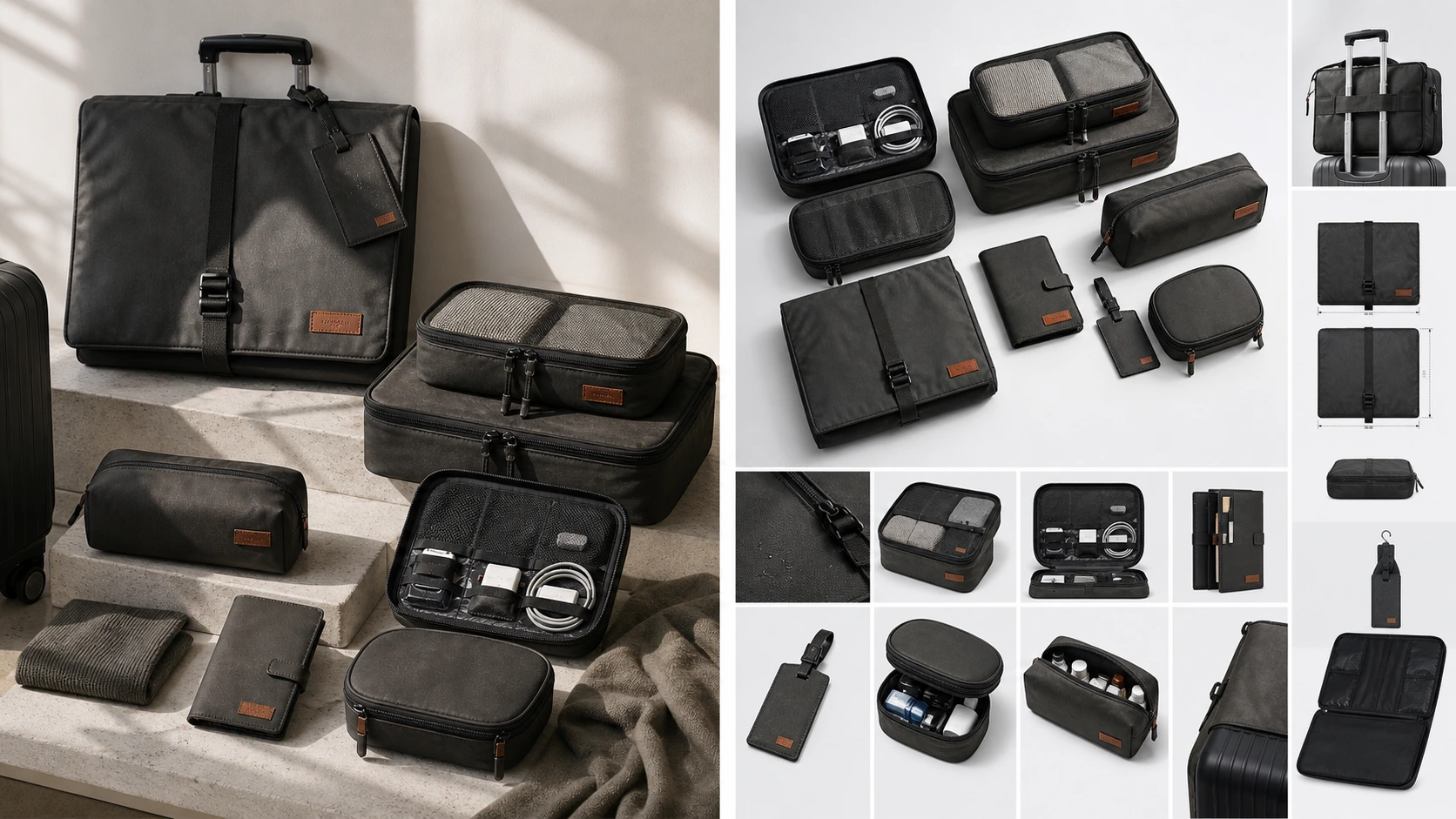
For the travel accessories brand, a marketplace image set for packing cubes should not look like an Instagram campaign shoot only.
It needs:
- main product clarity
- size or scale
- use case
- what fits inside
- material or detail view
- bundle or variant clarity
- trust or care information where relevant
Marketplace checklist
Ask:
- Is the product clear without reading a long description?
- Does the image set explain the product?
- Are key details visible?
- Does the visual style still match the brand?
- Are claims marketplace-safe?
- Is the content too lifestyle-heavy for listing use?
- Does it show what the buyer actually receives?
8. Campaign consistency
Campaign consistency means the pieces work together.
For example, a travel accessories brand may run a campaign called:
"Pack Cleaner for Weekend Trips."
Campaign assets may include:
- packing cube product shot
- passport wallet lifestyle image
- cable pouch ad
- AI creator video explaining packing routine
- carousel showing travel organization
- campaign post for weekend travel
- marketplace image refresh for related products
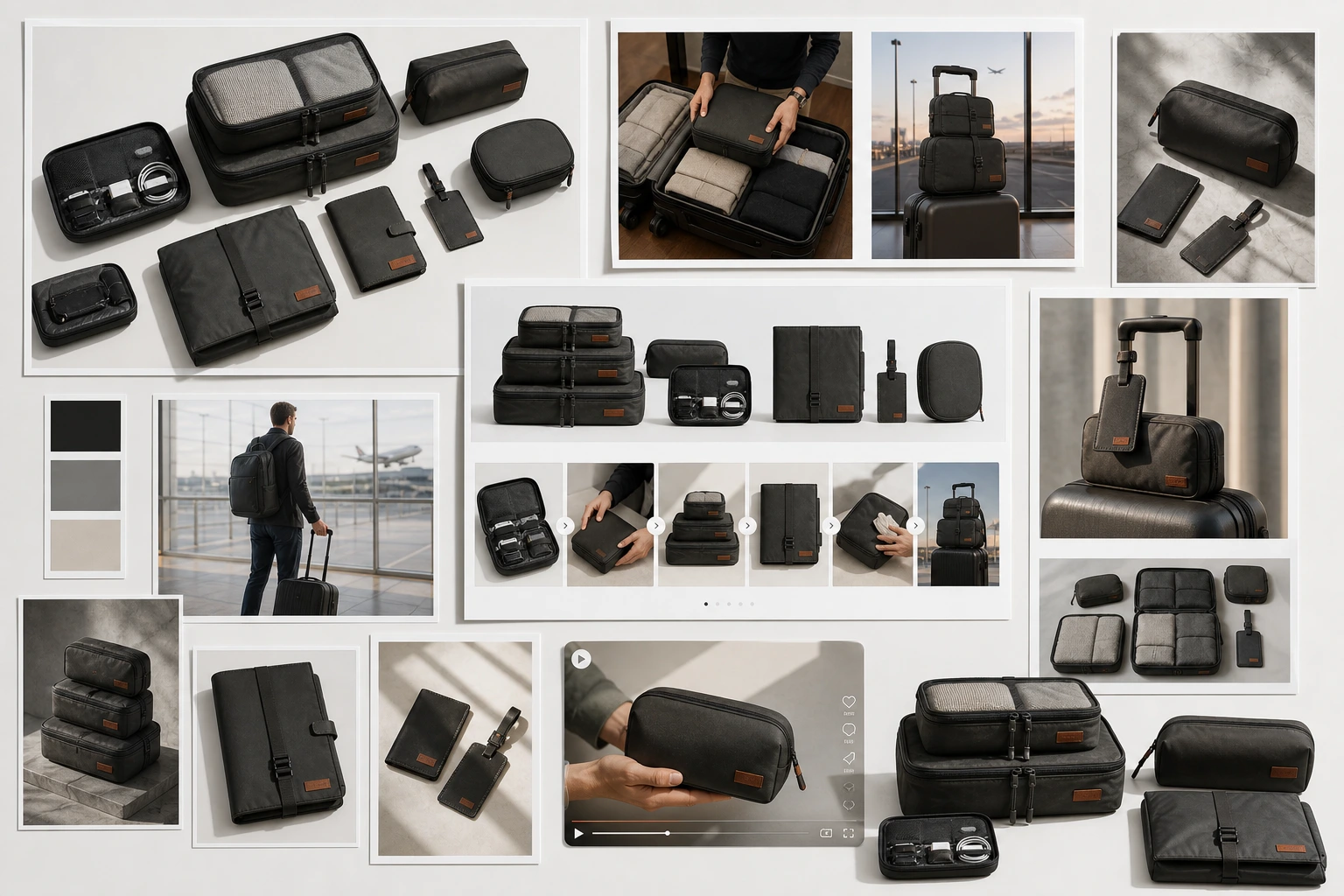
Each asset can have a different job.
But they should share:
- visual style
- message hierarchy
- brand tone
- product truth
- campaign theme
- CTA style
Campaign checklist
Ask:
- Do campaign assets look related?
- Is the product story consistent?
- Does each asset have a clear job?
- Are claims consistent across posts, ads, and listings?
- Does the campaign stay on-brand across formats?
- Are assets organized for reuse?
9. Localization consistency
If the brand creates multilingual content, consistency gets harder.
A translated asset can drift from the original brand voice.
A localized video may sound too formal.
A caption may become too promotional.
A claim may become stronger in another language.
For a travel accessories brand, localization should review:
- language accuracy
- tone
- CTA
- product claim
- market fit
- avatar or scene fit
- cultural relevance
- platform behavior
Localization checklist
Ask:
- Does the localized content sound natural?
- Does it still feel like the same brand?
- Did the claim change during translation?
- Does the scene fit the market?
- Does the CTA sound right in that language?
- Has a human reviewed the final version?
10. Asset reuse consistency
AI-generated content can create asset chaos if outputs are not organized.
A brand may generate:
- product images
- ad images
- video stills
- scripts
- carousel slides
- marketplace image sets
- A+ modules
- campaign posts
- founder-led content
- captions
If these assets are not saved and organized, the team may recreate work repeatedly.
Asset reuse consistency means:
- approved assets are saved
- assets are linked to products
- campaigns are grouped
- final versions are easy to find
- rejected versions are not reused accidentally
- downloadable files are named properly
- media libraries are used as a source for future content
Consistency is not only creative.
It is operational.
Generic AI workflow vs AgenixSocial Brand DNA workflow
| Step | Generic AI workflow | AgenixSocial Brand DNA workflow |
|---|---|---|
| Brand context | User repeats it manually | Stored as reusable Brand DNA |
| Product context | User pastes details each time | Imported from Shopify where supported or manually added |
| Visual direction | Rewritten in every prompt | Guided by brand identity and product context |
| Product images | Often missing | Used as part of product context |
| Channel behavior | User must specify repeatedly | Content workflows are built around use cases |
| Review | Still required | Still required, but starts closer to usable output |
| Asset reuse | Often scattered | Save, download, schedule, or organize in Media Library |
| Best use | One-off content | Repeated commerce content workflows |
The point is not to remove human review.
The point is to reduce repeated briefing and make every workflow start from brand and product truth.
How AgenixSocial helps with AI brand consistency
AgenixSocial Brand DNA helps D2C and marketplace brands maintain AI brand consistency by creating reusable brand and product context.
It can analyze the public brand website, identify brand voice and identity cues, import Shopify products where supported, and allow manual product creation where needed.
That context can then be reused across:
- Product Shots
- AI Creator Videos
- Marketplace Listing Studio
- Amazon A+ Studio
- Campaigns
- Founder Studio
- quick post workflows
- image ad workflows
- media library reuse
AgenixSocial gives ecommerce teams a stronger starting point by grounding content workflows in reusable brand and product context. Teams still review final assets for product accuracy, claims, marketplace fit, and brand tone before publishing.
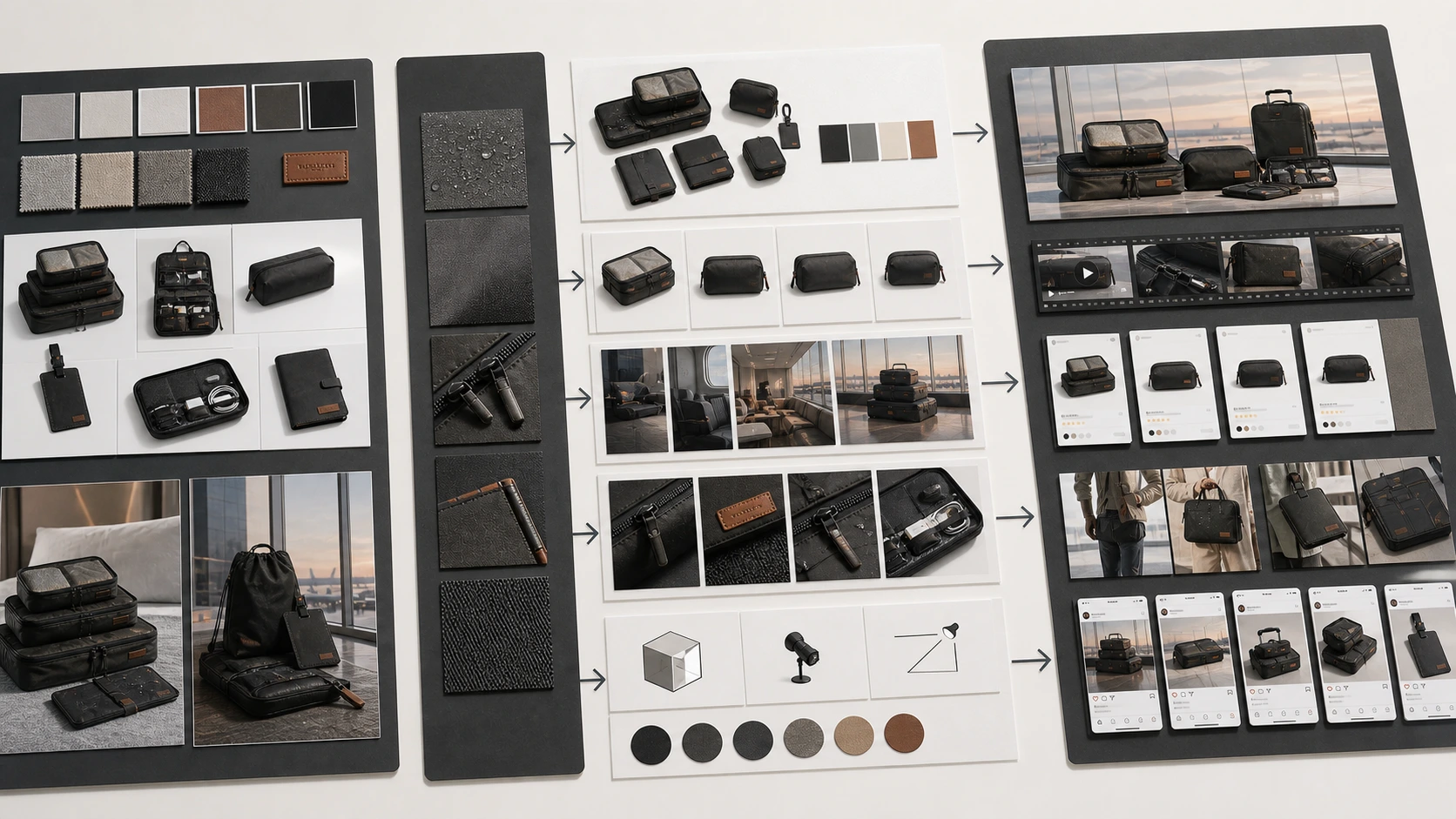
Full AI brand consistency checklist
Use this before publishing AI-generated ecommerce content.
| Area | Question |
|---|---|
| Brand voice | Does this sound like the brand? |
| Product accuracy | Is the product described and shown correctly? |
| Product catalog | Is the asset grounded in real product context? |
| Visual identity | Does it match the brand’s visual world? |
| Buyer relevance | Does it speak to the intended buyer? |
| Claim safety | Are all claims true and supportable? |
| Channel fit | Is this adapted for the right platform or workflow? |
| Marketplace readiness | Is the product clear, scannable, and buyer-friendly? |
| Campaign consistency | Does this asset fit the larger campaign? |
| Localization | Does the localized version sound natural and accurate? |
| CTA accuracy | Is the offer, link, or product action correct? |
| Asset organization | Is the final asset saved in the right place? |
| Human approval | Has a person reviewed it before publishing? |
If the answer is unclear, revise before publishing.
Final take
AI brand consistency is not only about keeping the tone of voice similar.
For ecommerce brands, consistency means the product is accurate, the visual style fits, the claims are safe, the channel is respected, the campaign connects, the marketplace asset is clear, and the final output still feels like the same brand.
The checklist is simple:
Start from Brand DNA.
Ground the output in product catalog context.
Adapt it for the channel.
Review before publishing.
AgenixSocial Brand DNA helps D2C and marketplace brands create more consistent AI-generated content by giving each workflow reusable brand and product context.
That is how AI-generated ecommerce content stays faster without becoming generic.